Research-Driven Wellbeing: A Privacy-Centered Wellness App
Overview
Real-world project conducted collaboratively between a consulting agency and a major tech company.
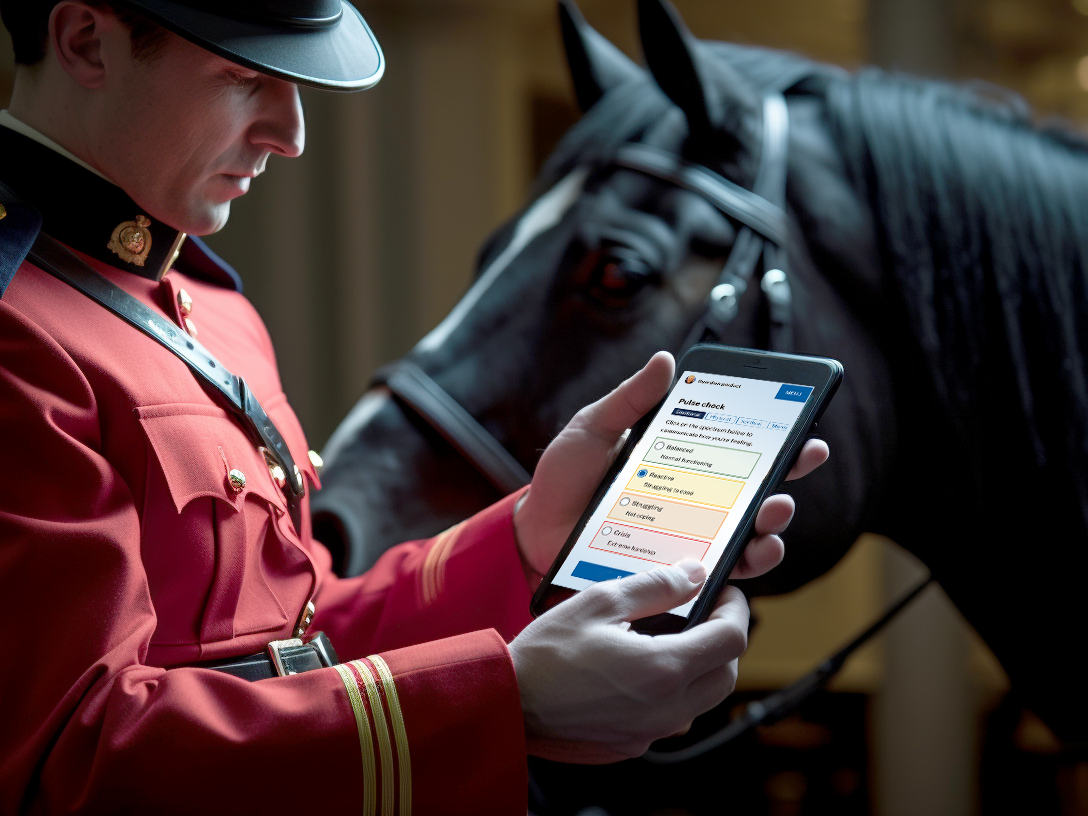
Aimed to address wellness needs for first responders through an innovative digital solution integrating technology tailored to unique mental health challenges.
Background
Joint effort to tailor a digital platform to meet the wellness needs of first responders.
Achieved comprehensive understanding through interviews with relevant professionals, subject-matter experts, and powerful stories from individuals (e.g., firefighters) regarding the impact of stress.
Focus
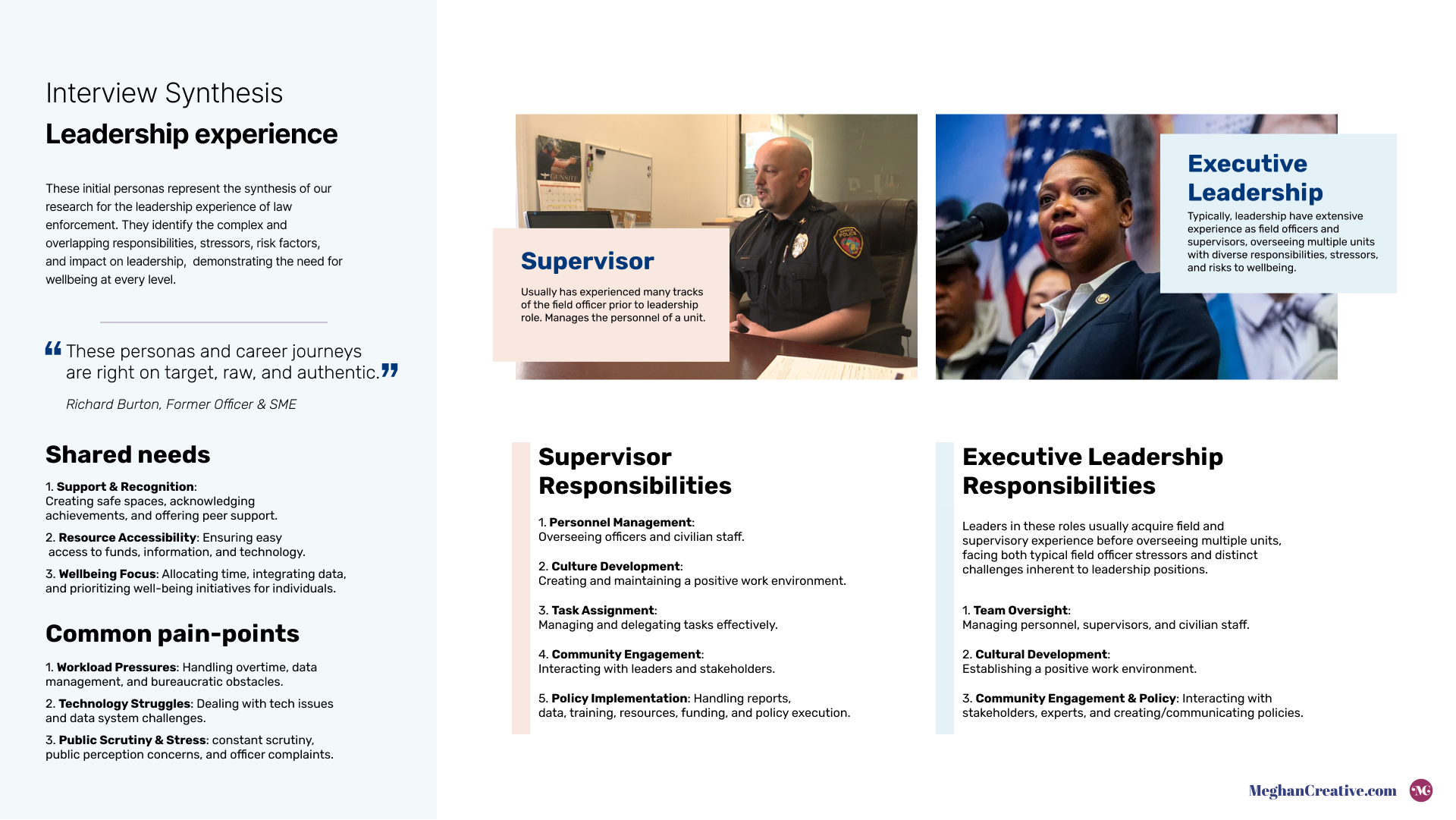
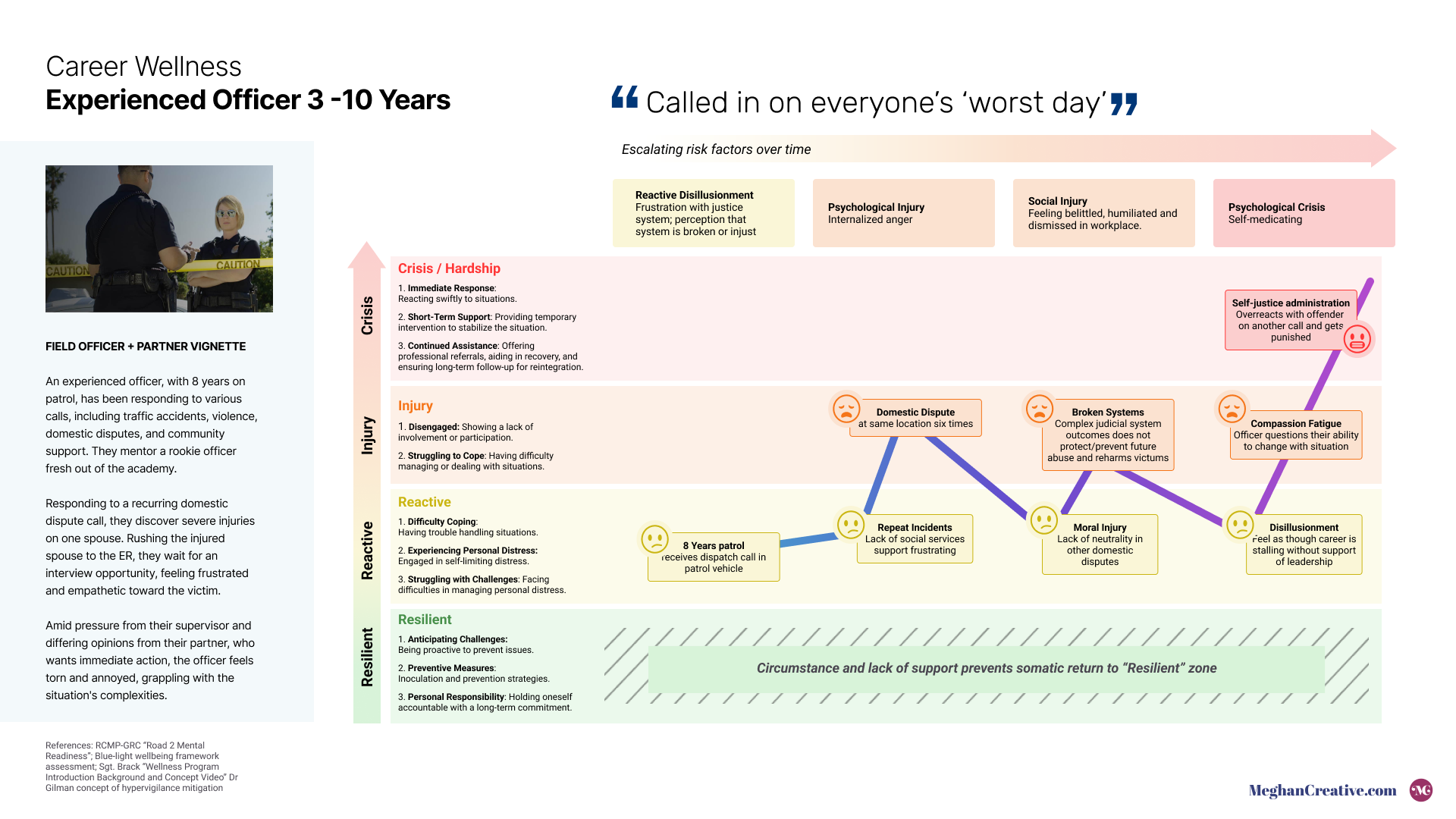
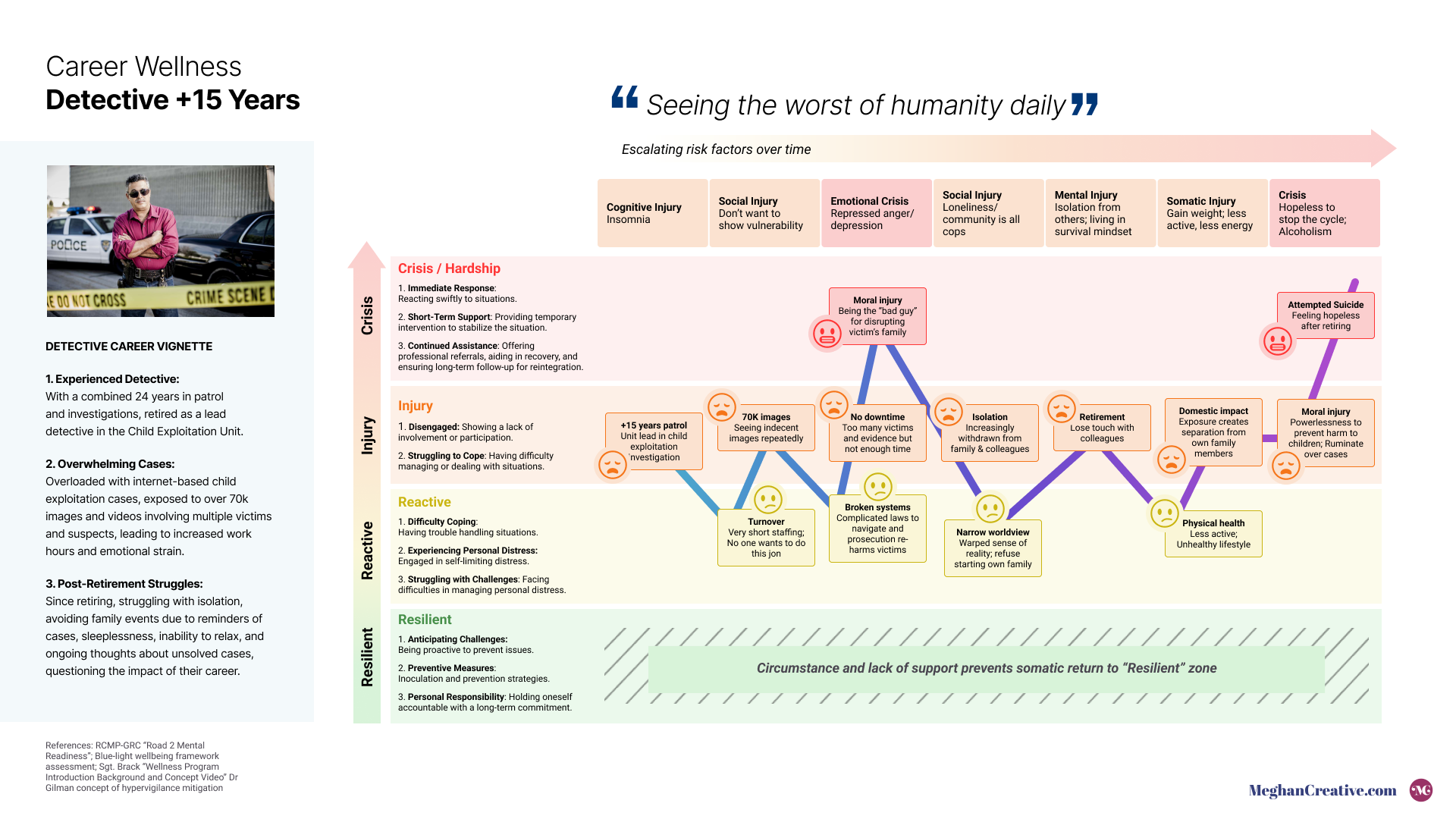
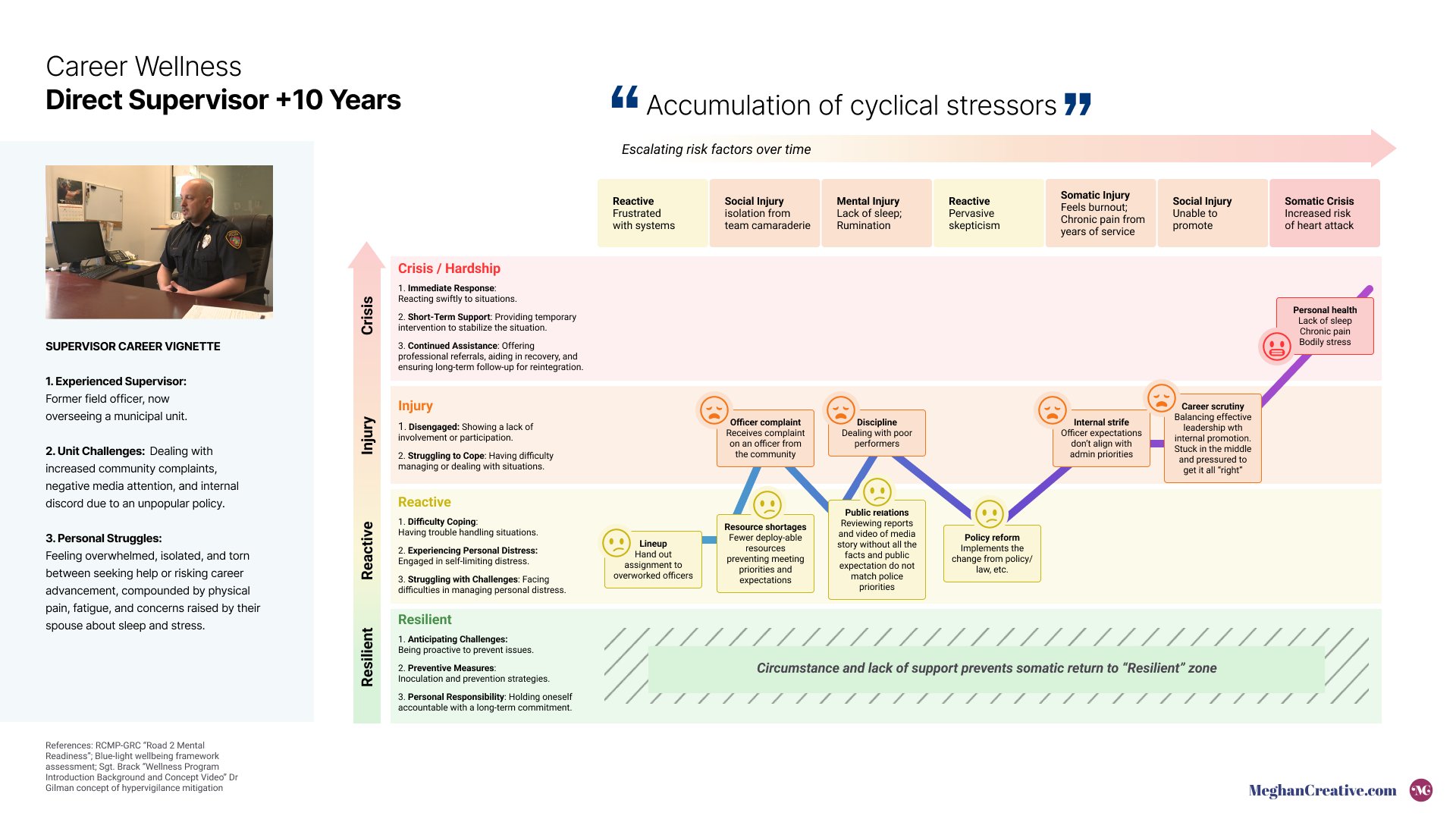
User Research: Conducted protocols and in-depth interviews; synthesized findings.
Cross-Team Collaboration: Advocated design requirements grounded in user research; collaborated with psychologists and data scientists.
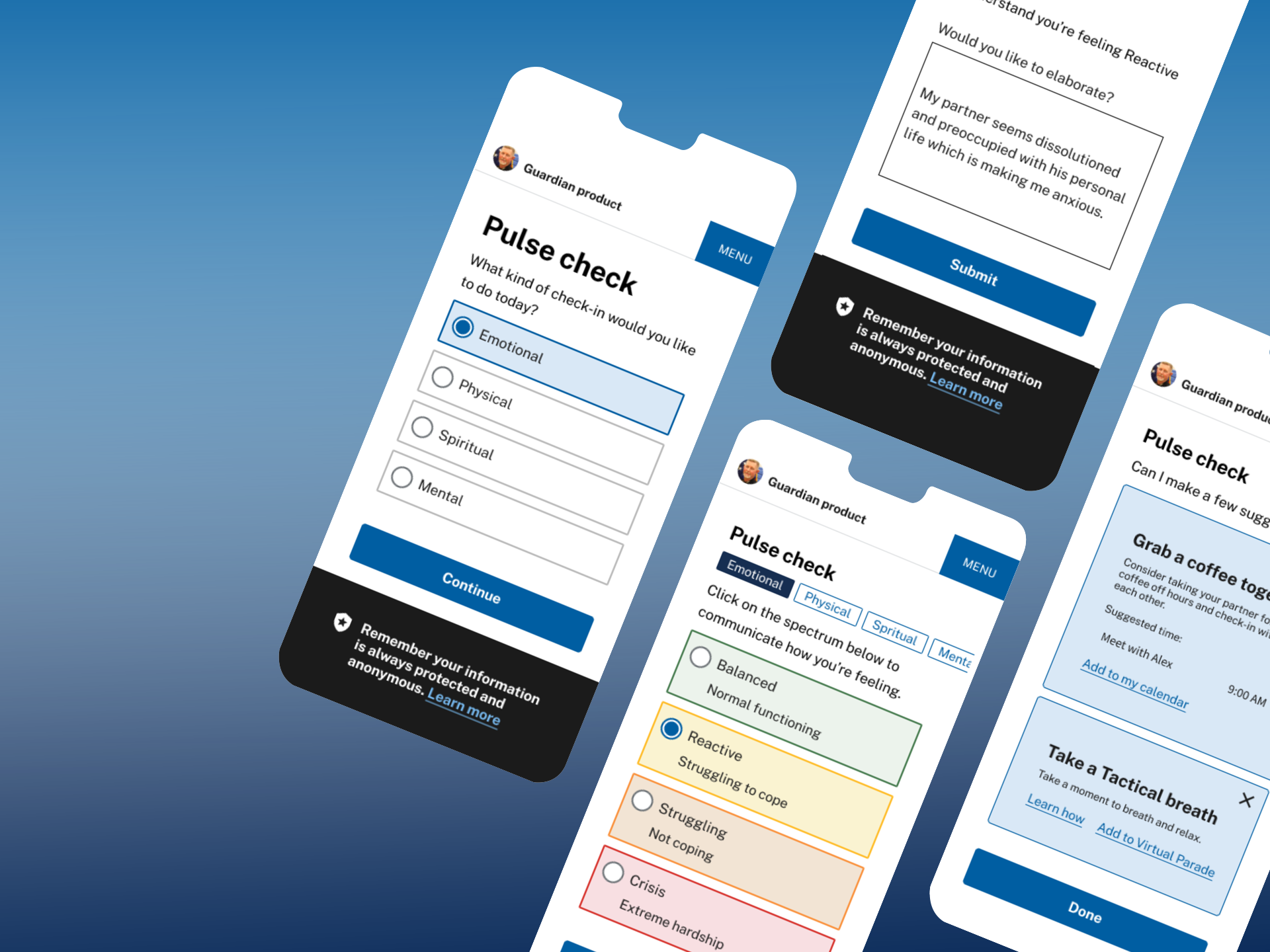
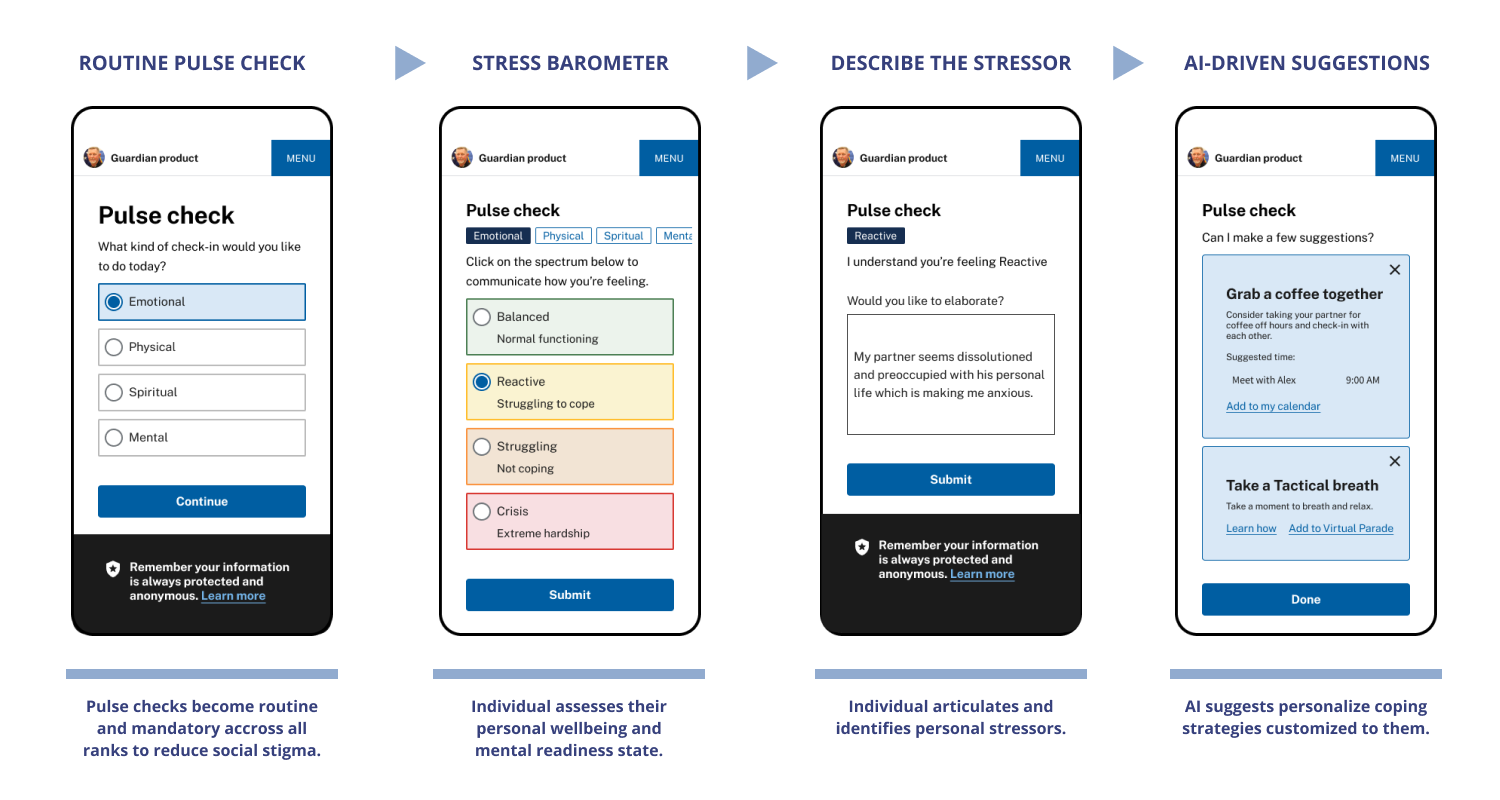
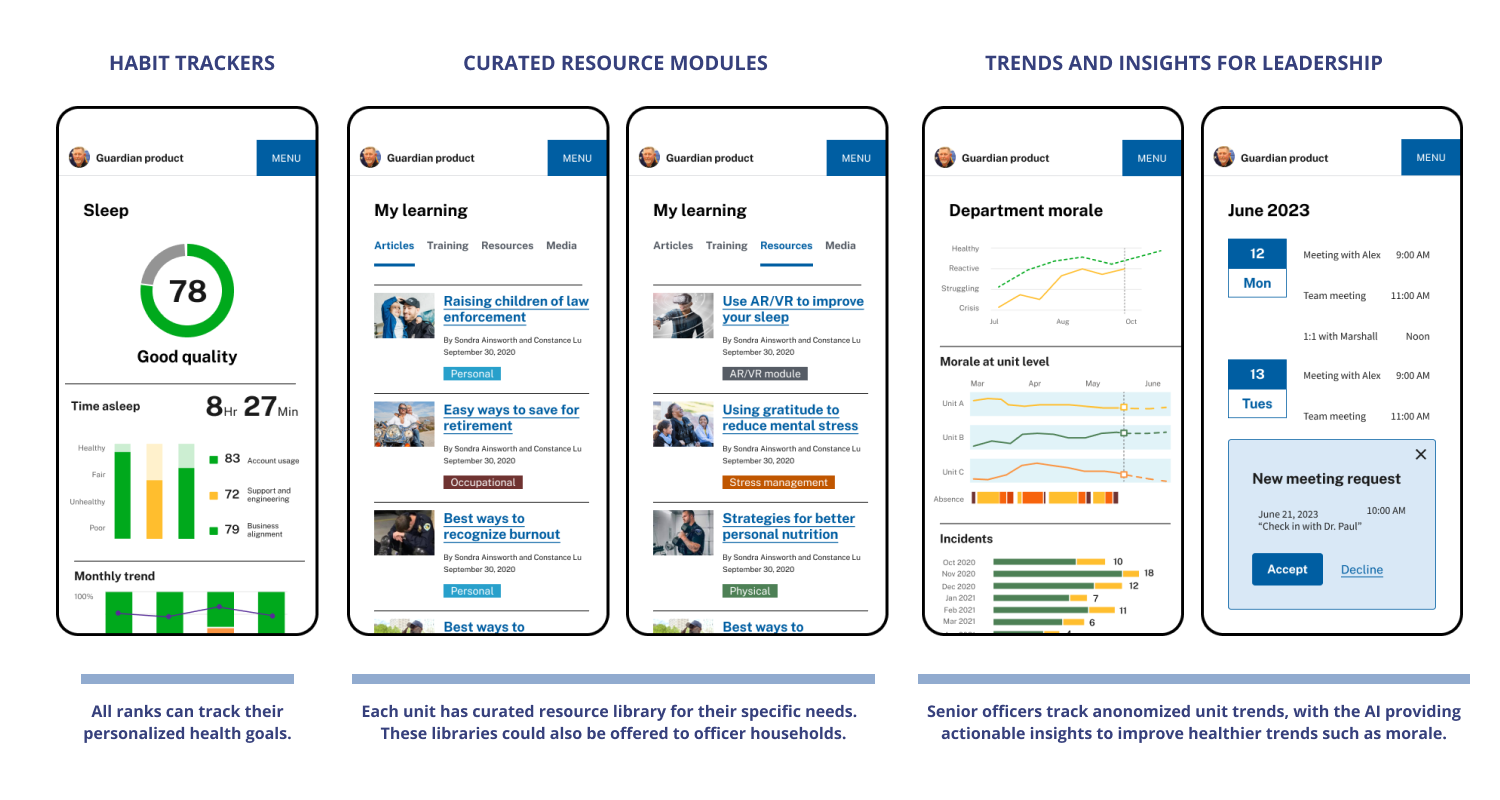
UI/UX Design: Wire-framing and prototyping using design systems; focused on user-friendly and empowering app features.
Purpose
Aimed to develop a mental health solution through a digital platform tailored for first responders facing unique challenges.
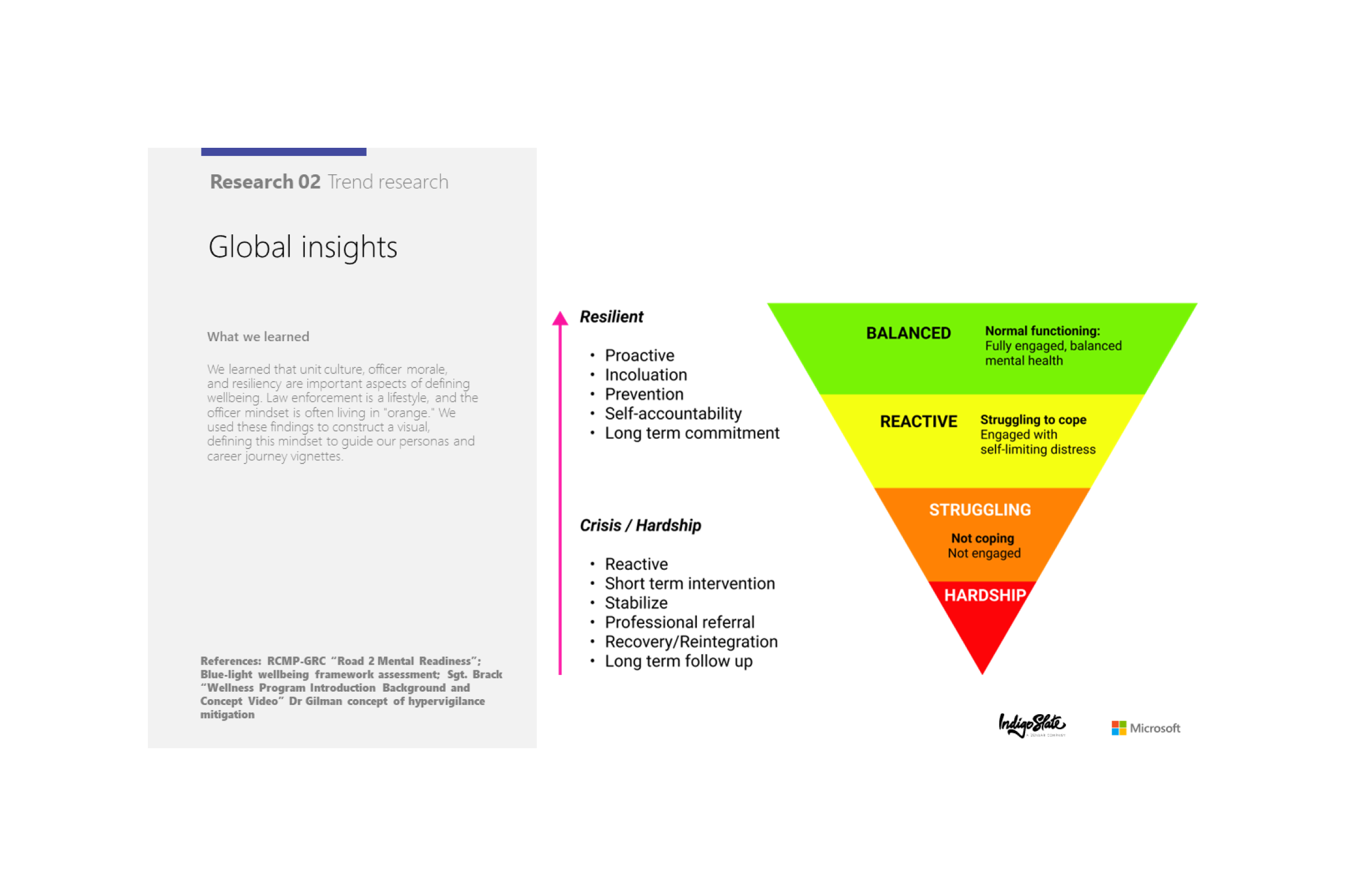
Focused on creating a proactive, resilient wellbeing program to provide preemptive support and reduce long-term psychological impacts like burnout.
Team
Personal Contributions: Conducted workshops, organized virtual sessions, and executed detailed user research (protocol development and interviews).
Design Support: Collaborated on onboarding, information architecture, and crafted narratives for clear user journeys and privacy-conscious experiences.
Team Structure: Diverse group of internal and external experts ensured a comprehensive product offering.
Scope
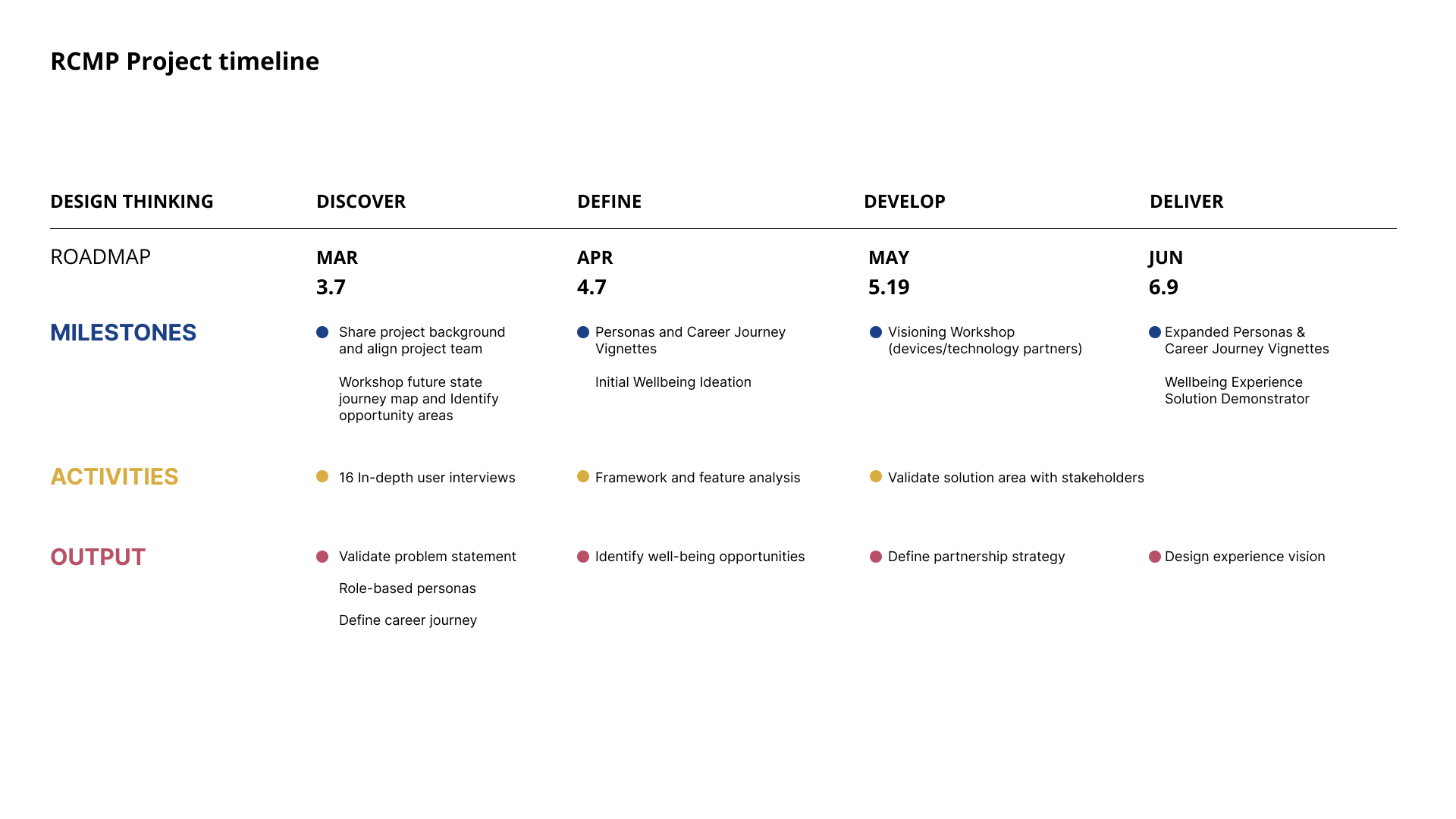
Timeline: Spanned several months beginning in early spring, with key milestones every eight weeks.
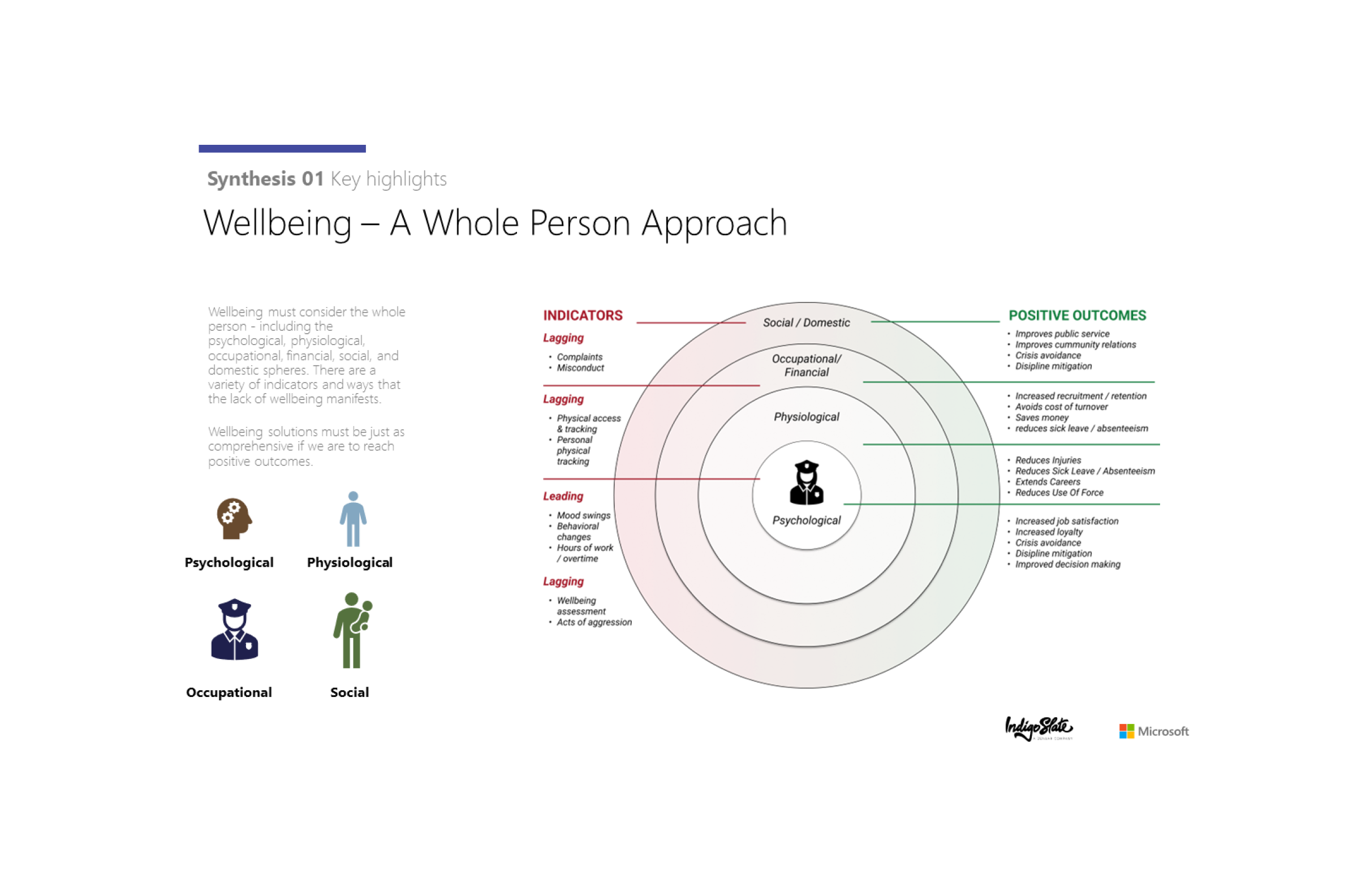
Scope: Focused on wellbeing and platform personalization through research, personas, and solution envisioning.
Constraints: Addressed confidentiality limitations and strict data anonymization requirements while managing the complexity of human wellbeing.

Process
Design Phases: Discover, Define, Develop, and Deliver.
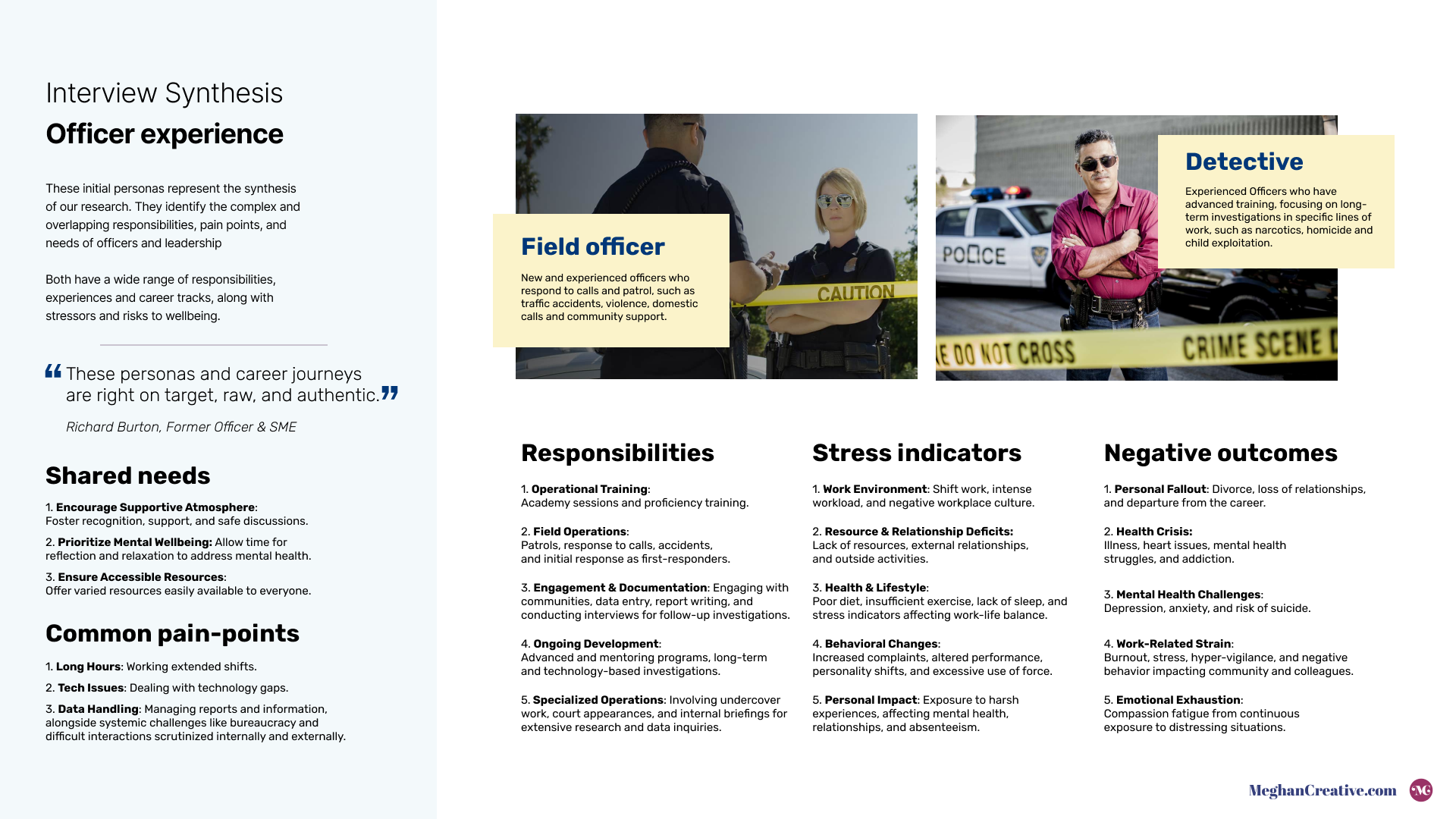
Execution: Engaged 9 first responders in interviews; the Define phase produced three user personas to guide prototyping and testing efforts.

Conclusion
Designed a research-driven, privacy-centered wellness app for first responders that shifted the focus toward user-centric development.
Demonstrated ability to translate complex user needs into actionable insights for user-centered innovation.