iBodyMap: Simplifying Medical Jargon through Visual Tracking
Overview
Transformed complex medical information into an interactive platform.
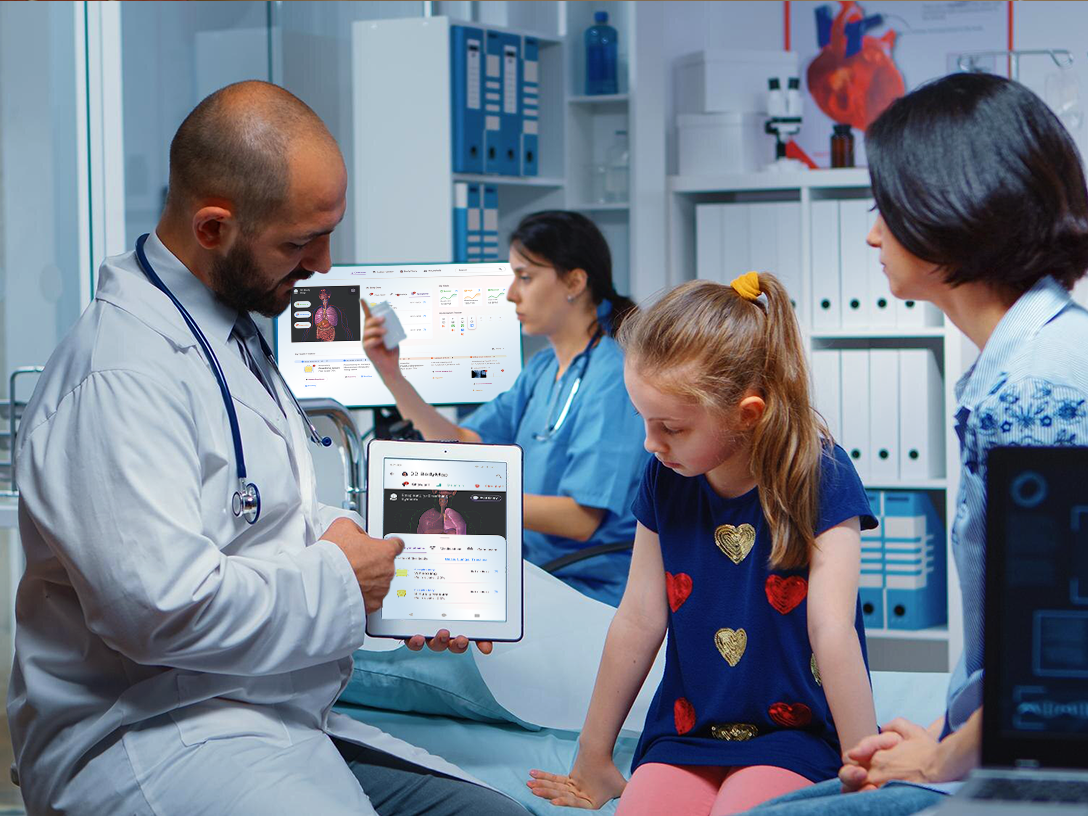
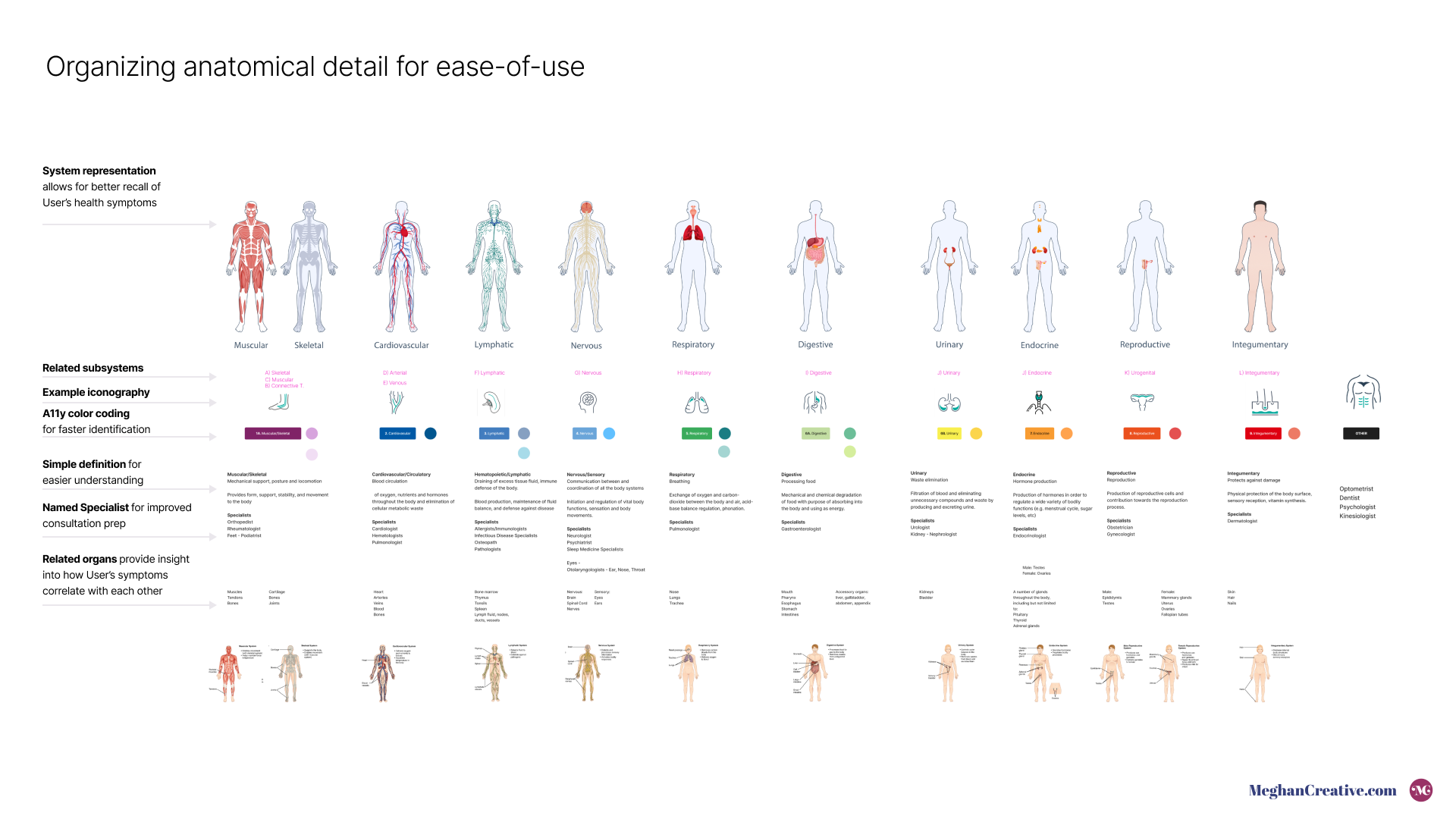
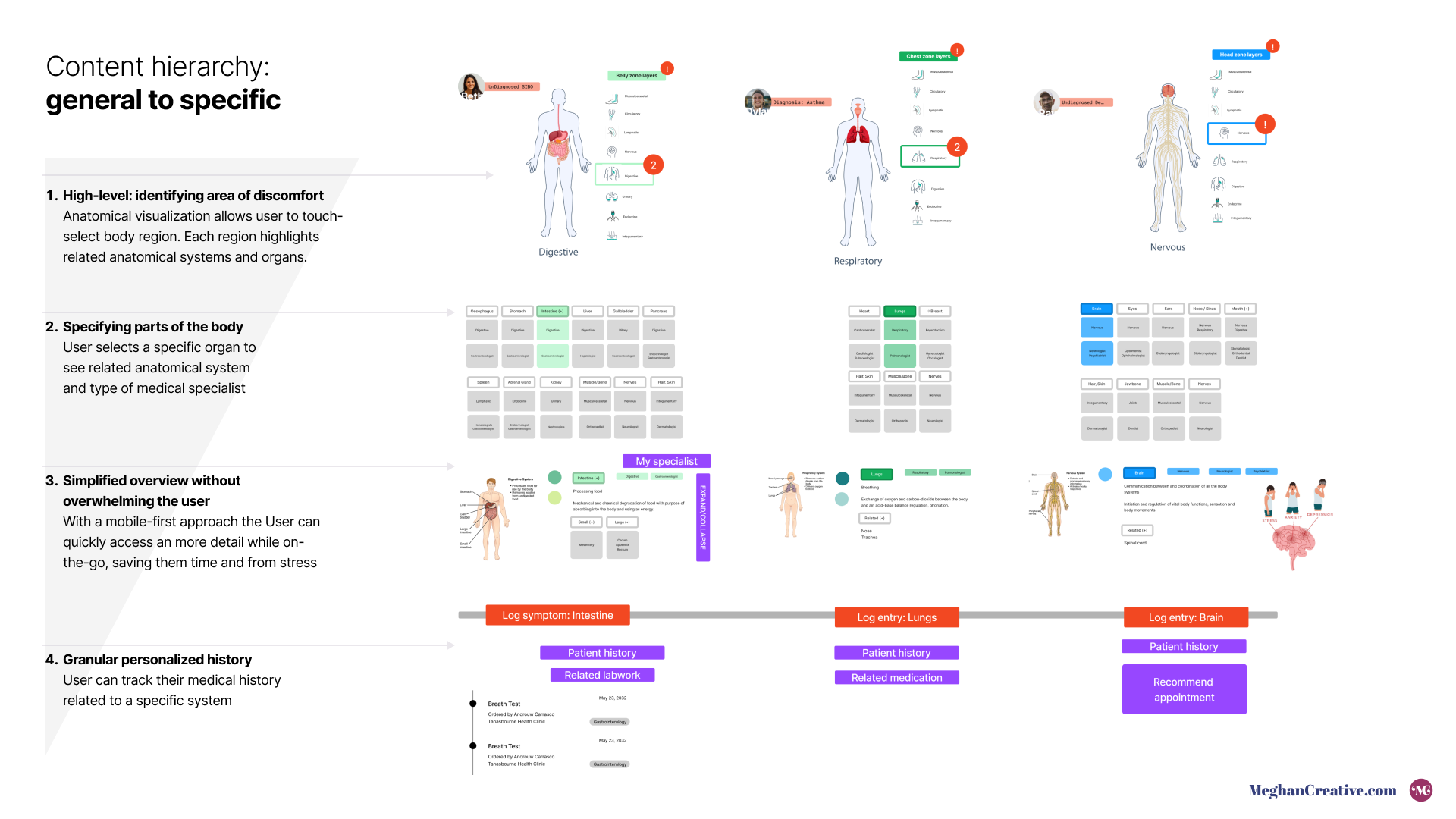
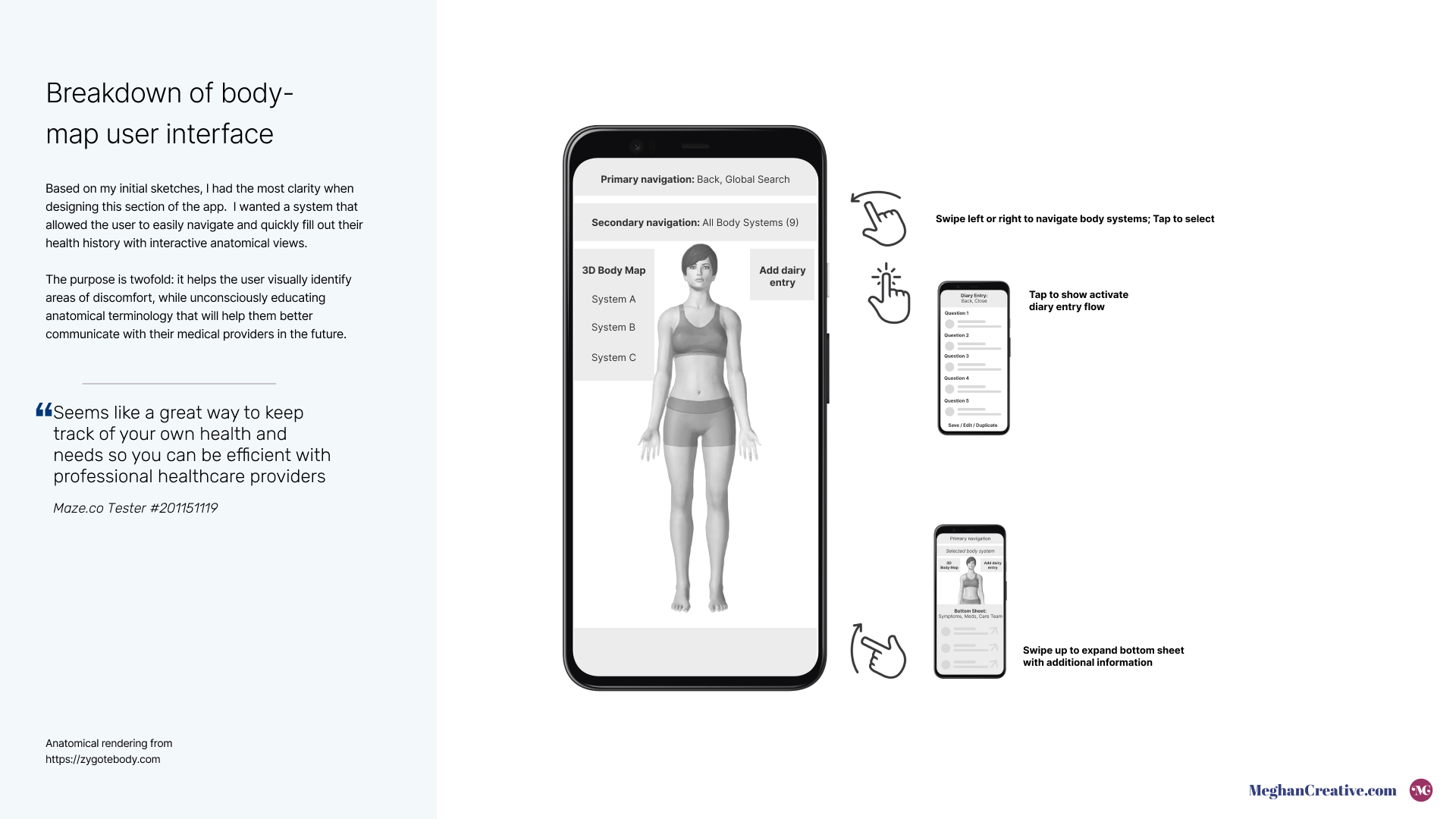
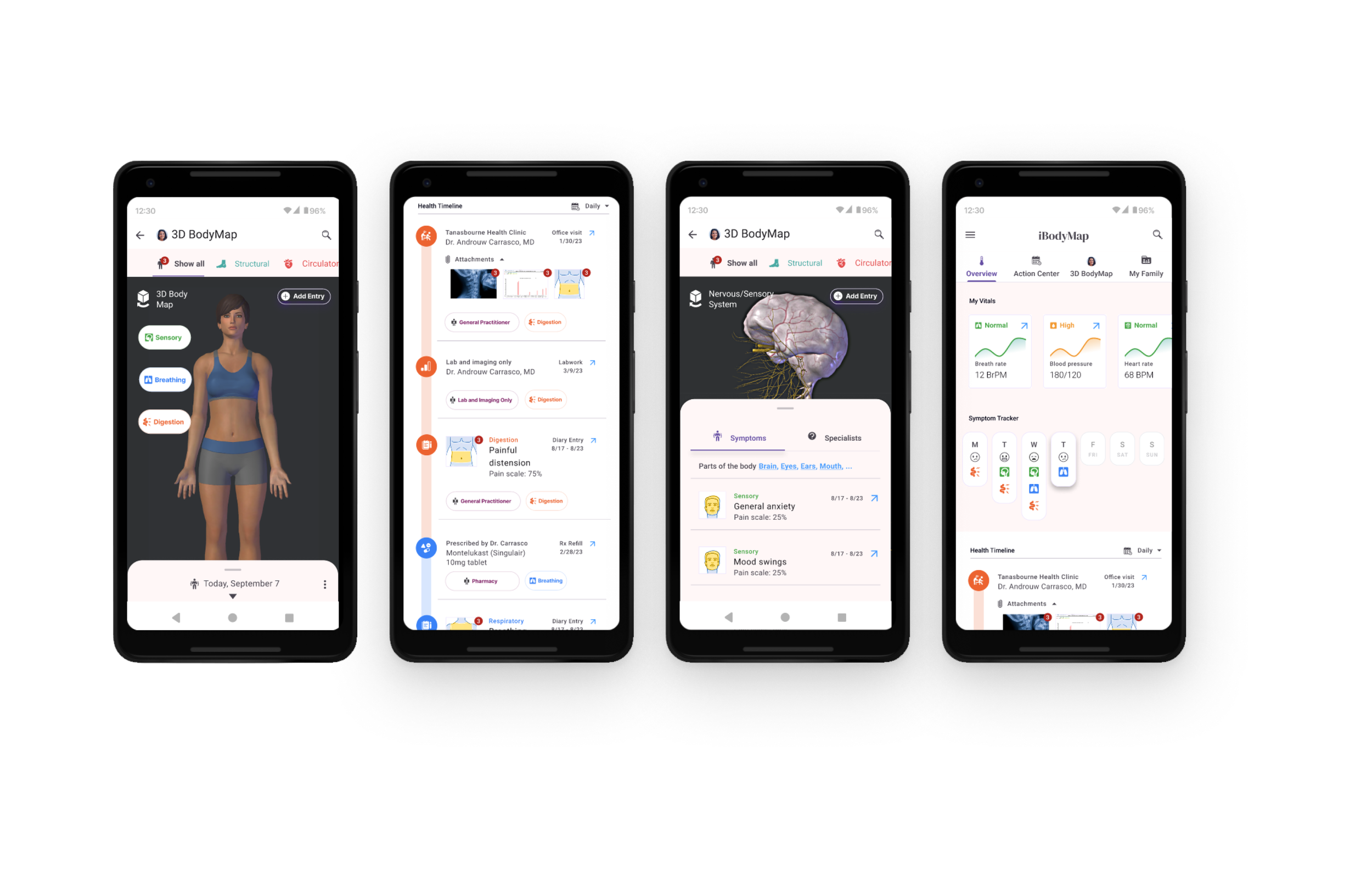
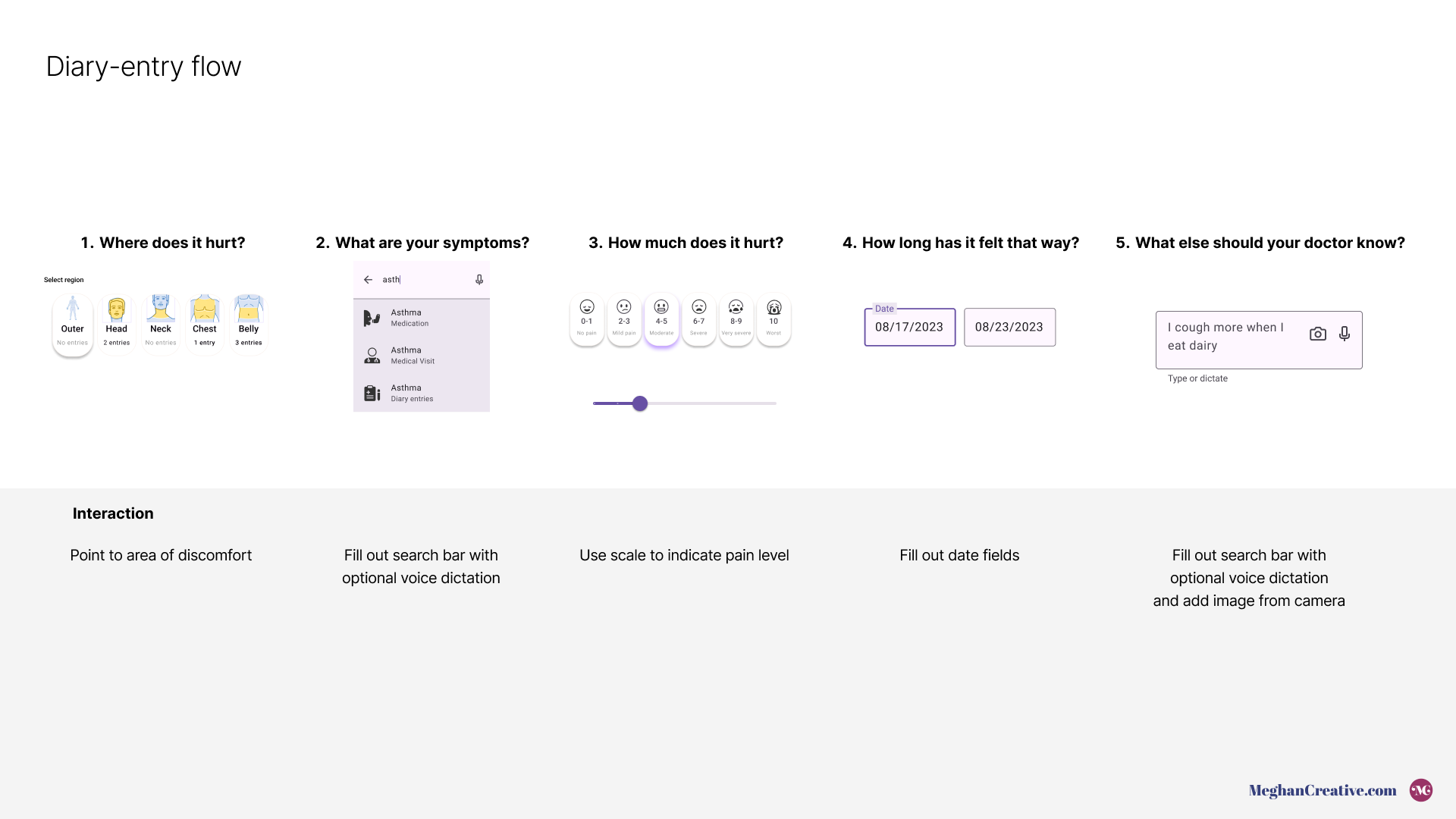
Combined a visual medical avatar to help users identify areas of discomfort and an integrated diary that aggregates provider information.
Addressed user pain points such as understanding medical jargon and fragmented health records.
Background
User-centered design initiative leveraging a gamified approach to replace traditional medical binders with an engaging, interactive health diary platform.
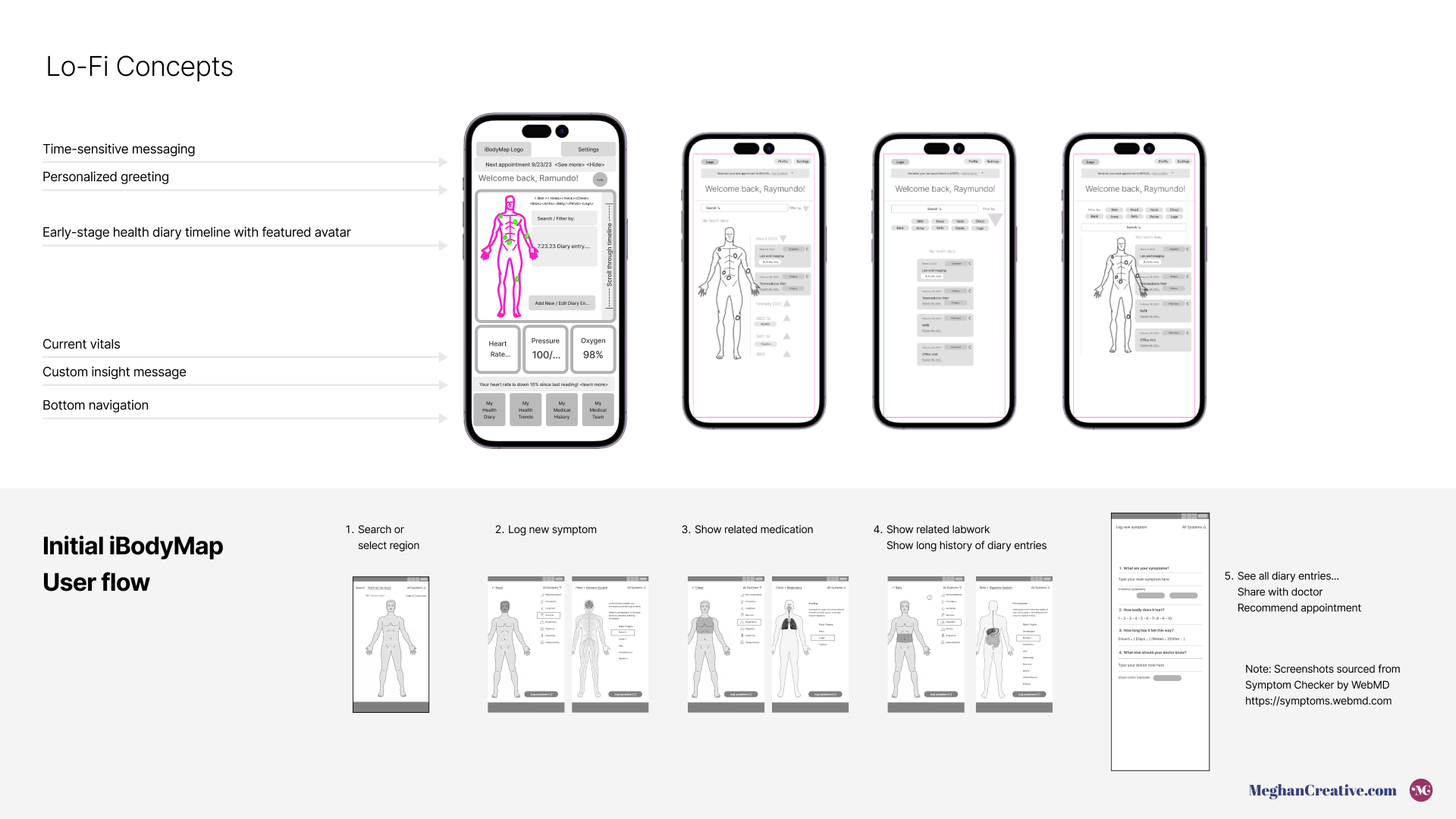
Features an interactive medical avatar and integrated record diary to make health tracking visual.
Purpose
Tackled challenges of medical data accessibility, user engagement with health apps, and seamless sharing of health data.
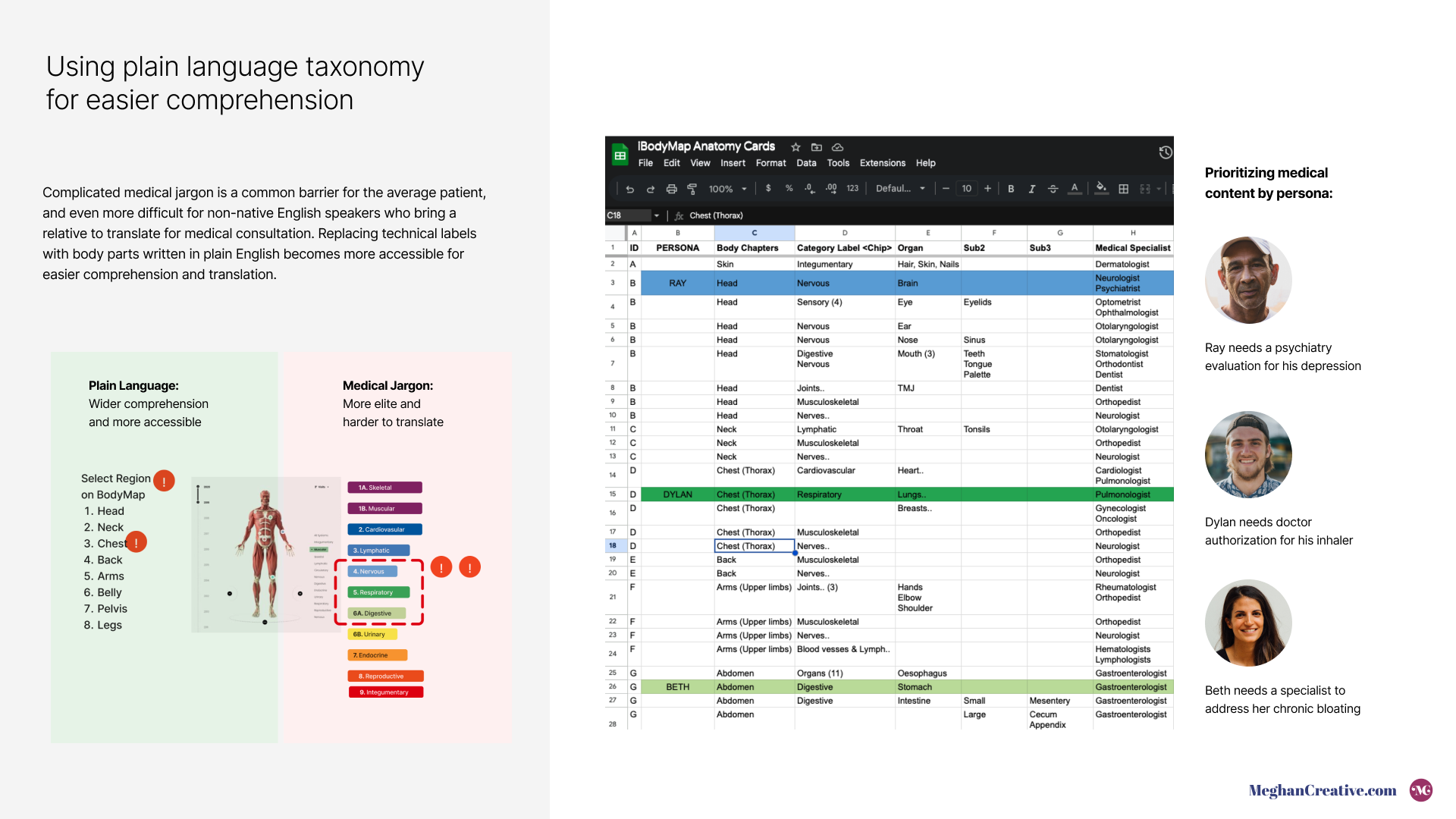
Simplified user pain points related to managing health records and understanding medical jargon visually.
Focused on ensuring data is stored on personal devices and providing comprehensive monitoring features.
Role
Solely managed all aspects of design, research, prototyping, and usability testing.
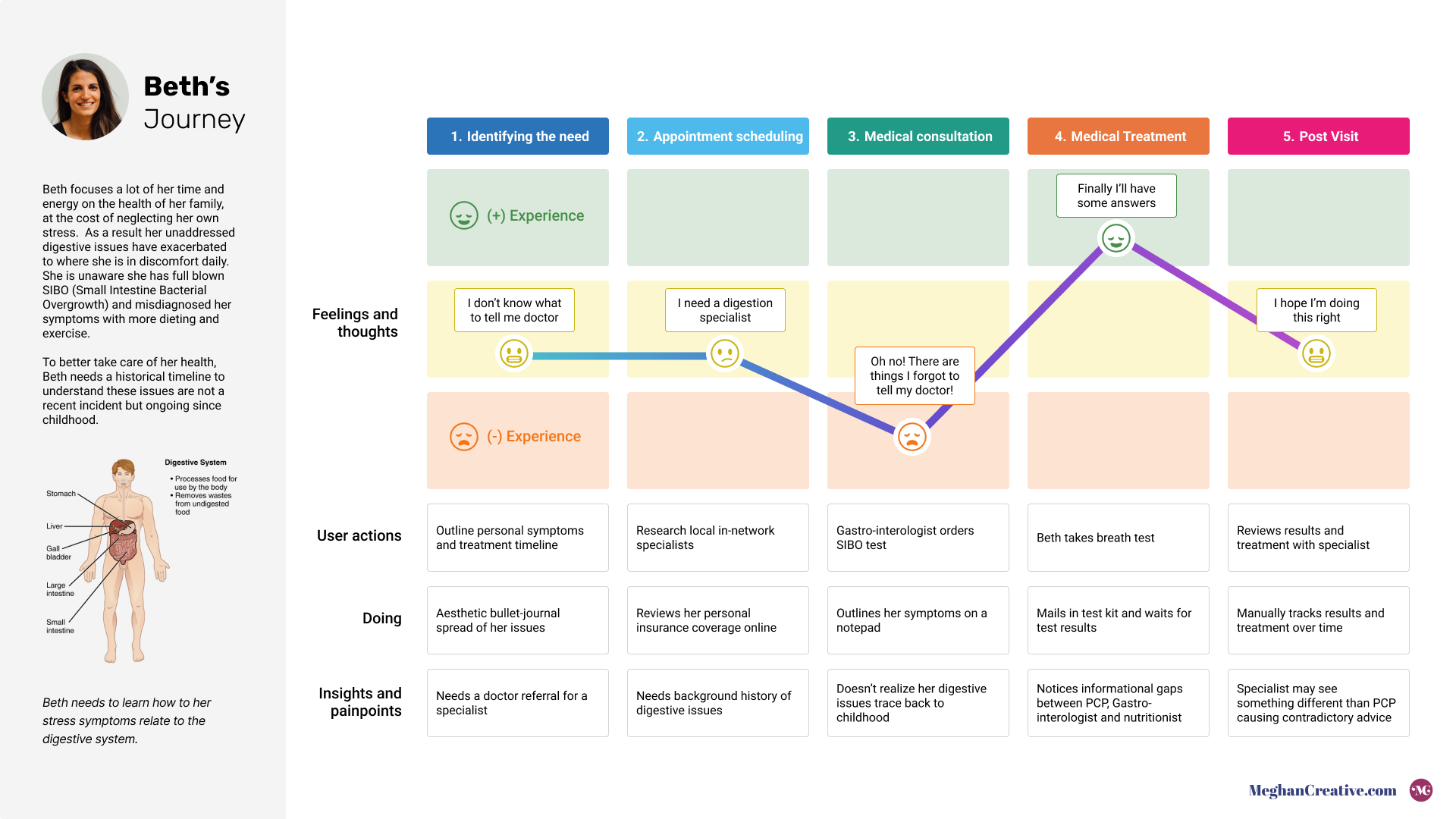
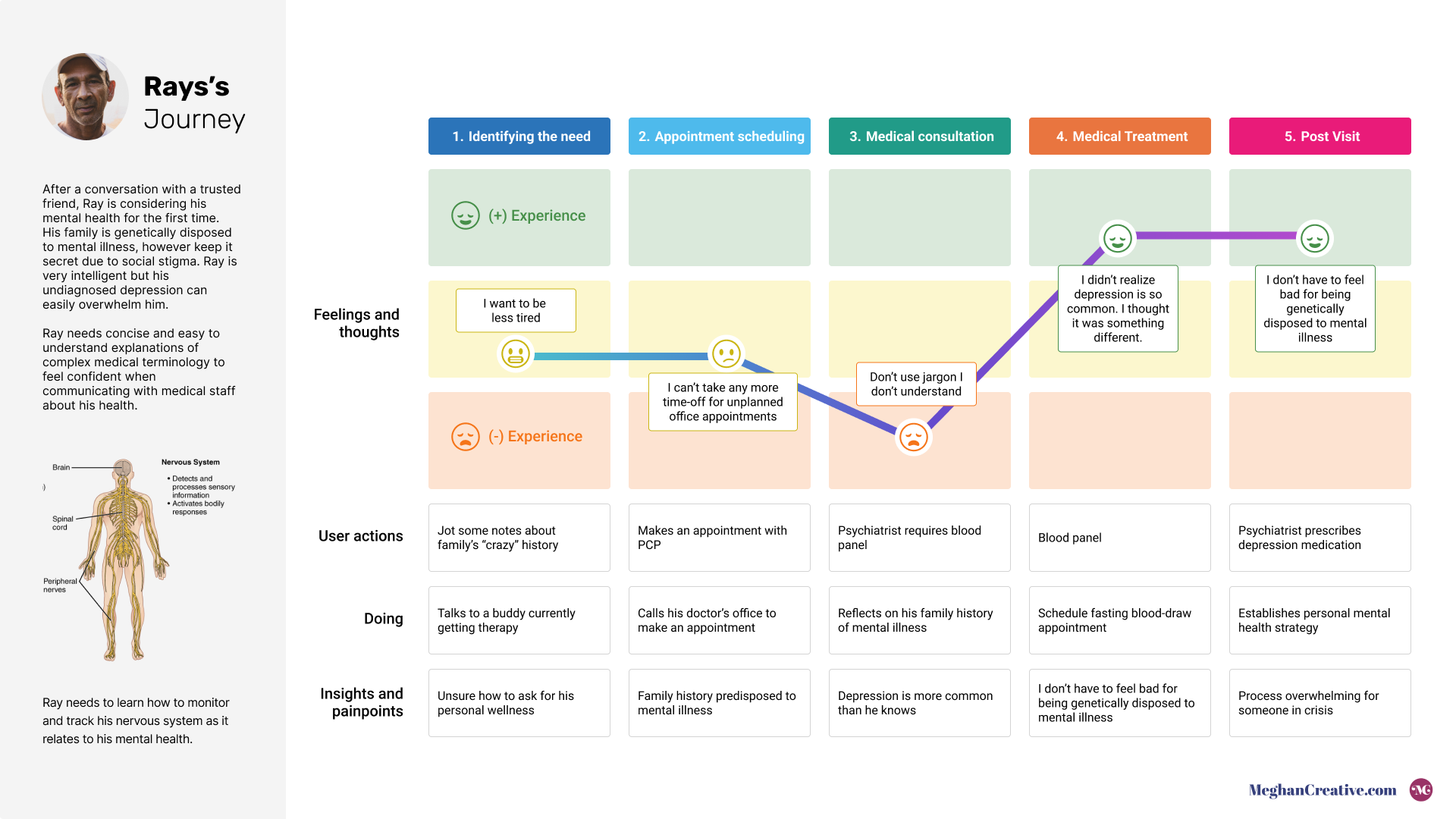
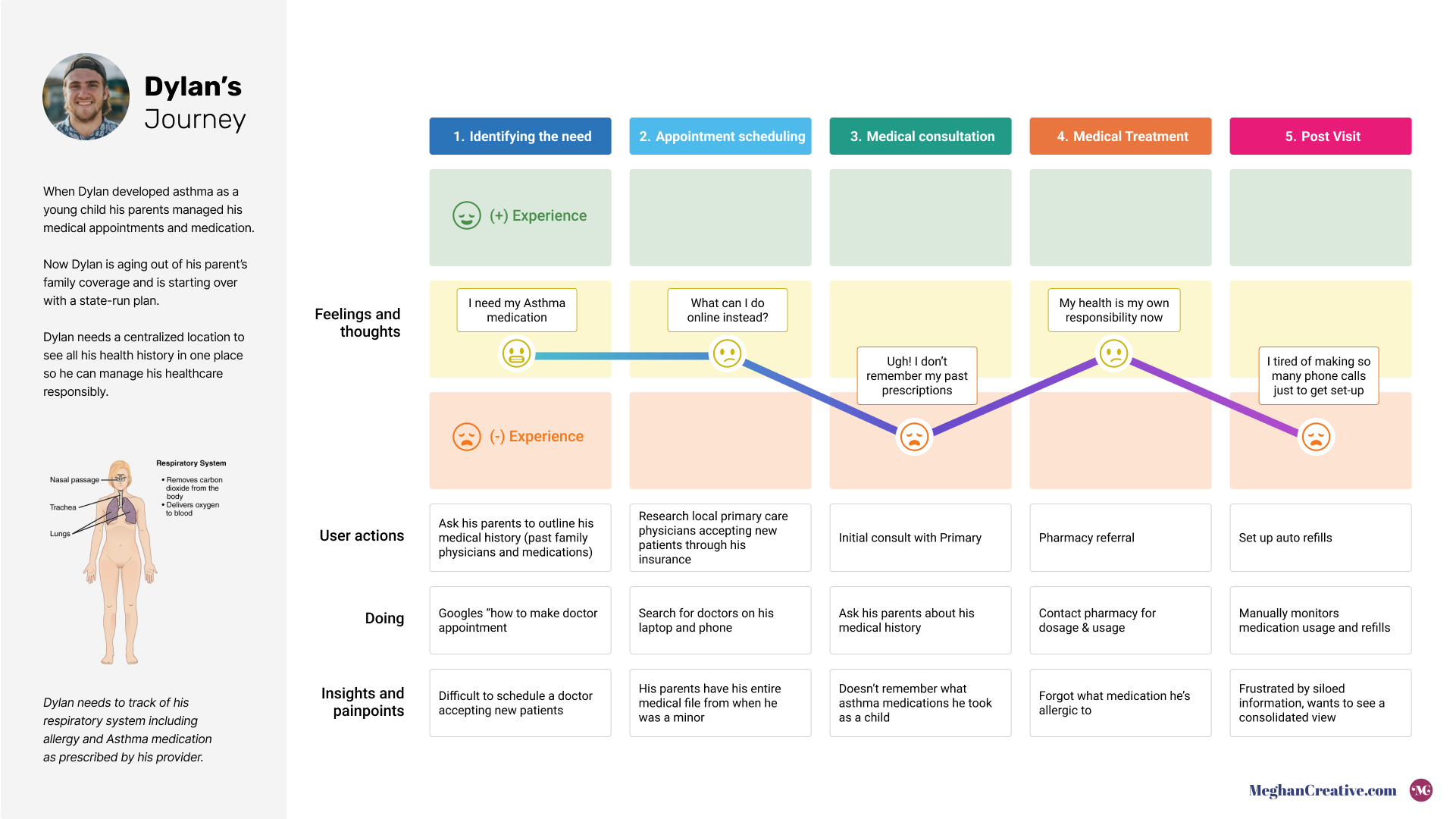
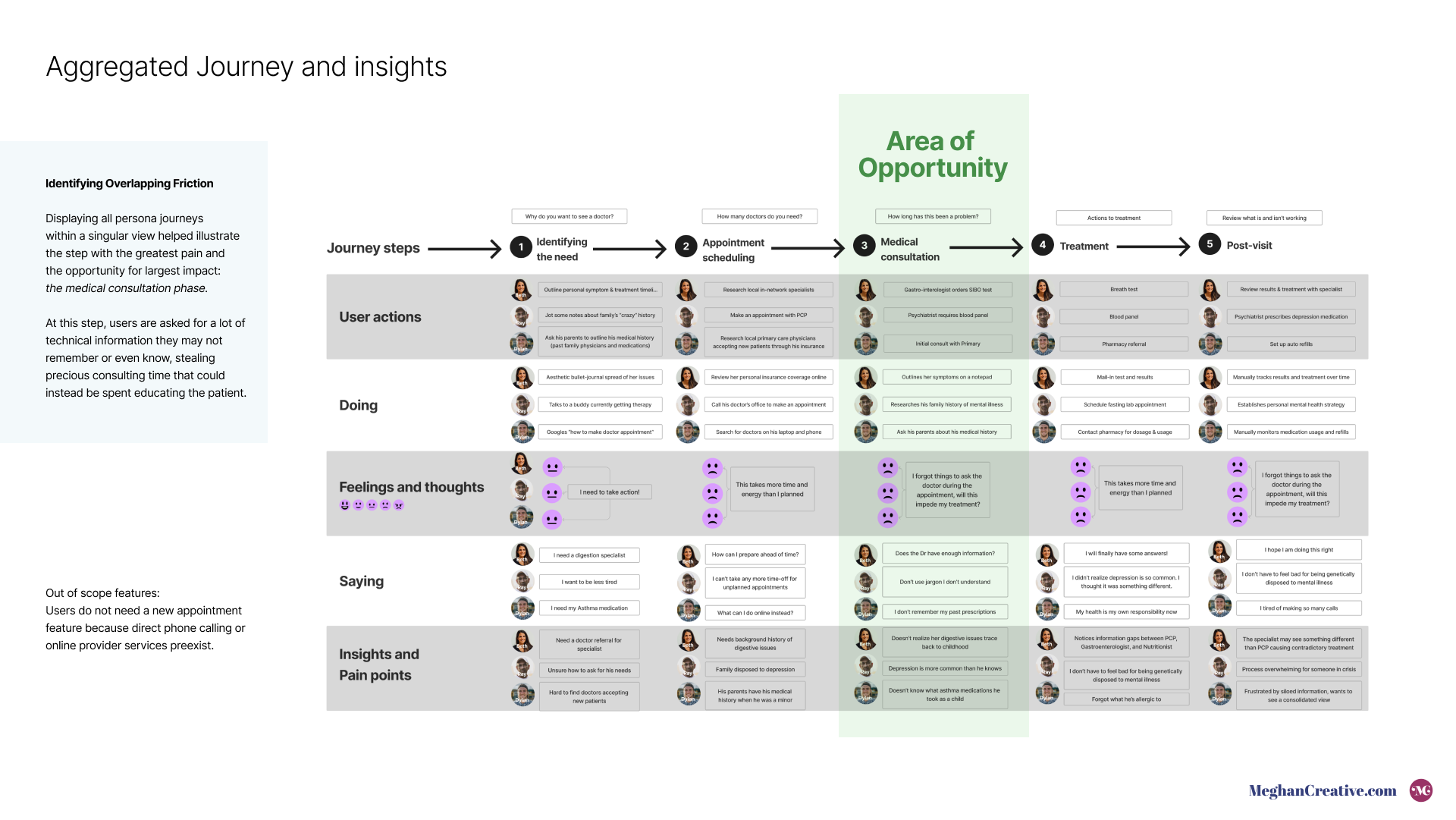
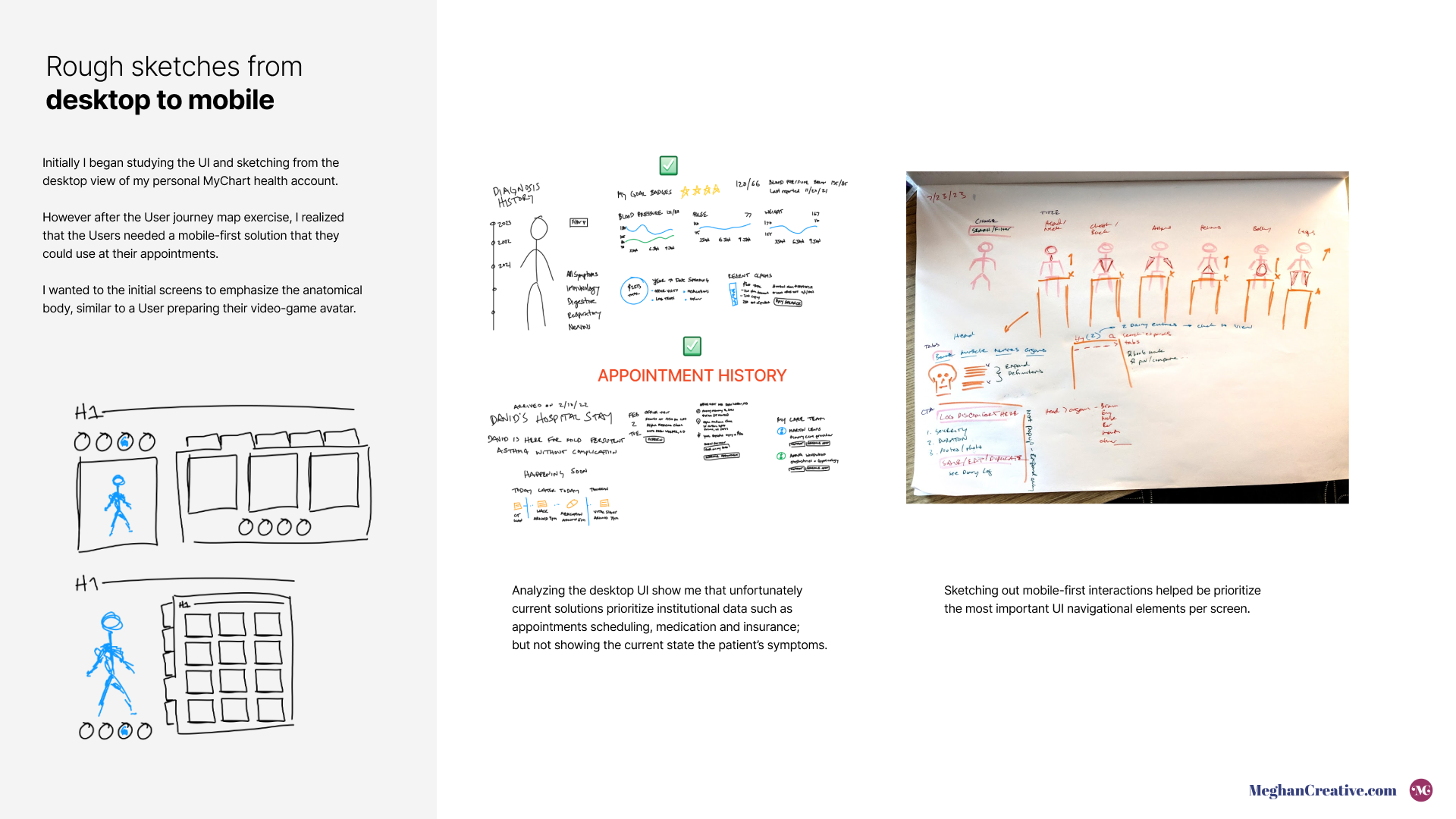
Made critical decisions such as redefining solution formats based on journey map insights and navigating constraints to focus on core functionalities.
Scope
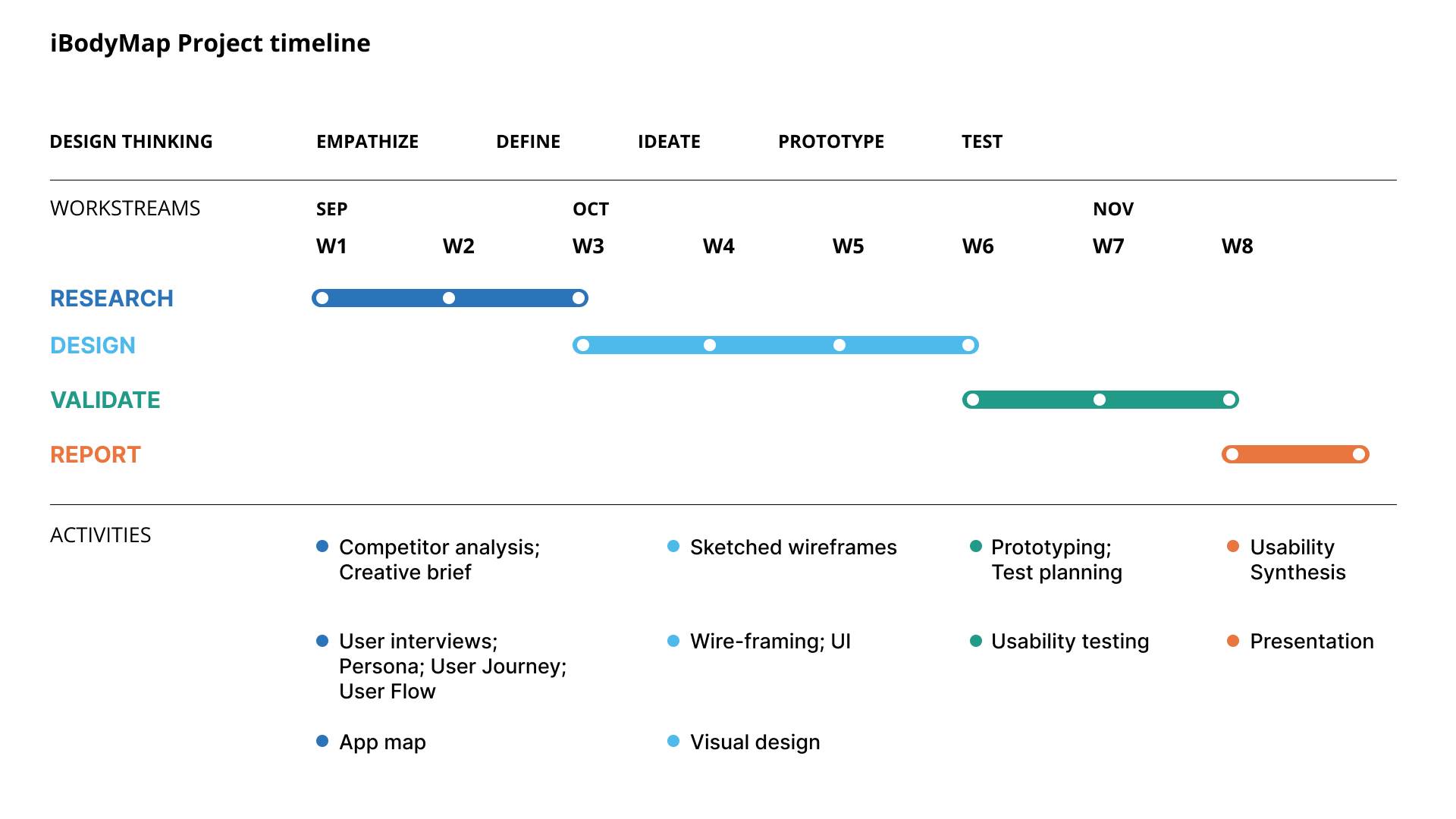
Completed in 8 weeks.
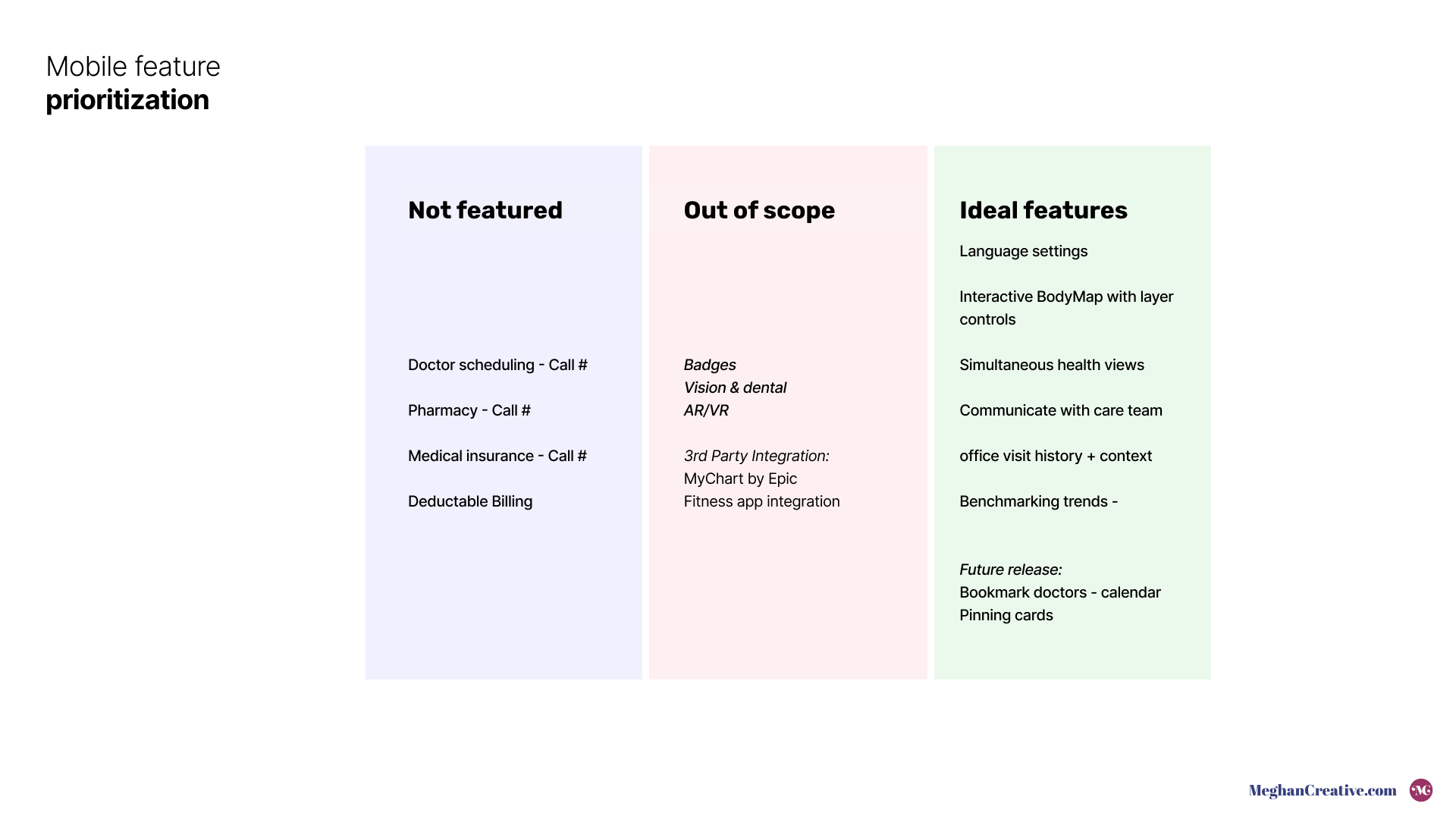
Faced constraints and trade-offs such as excluding advanced features like AR/VR views and third-party integrations due to time and resource limits.
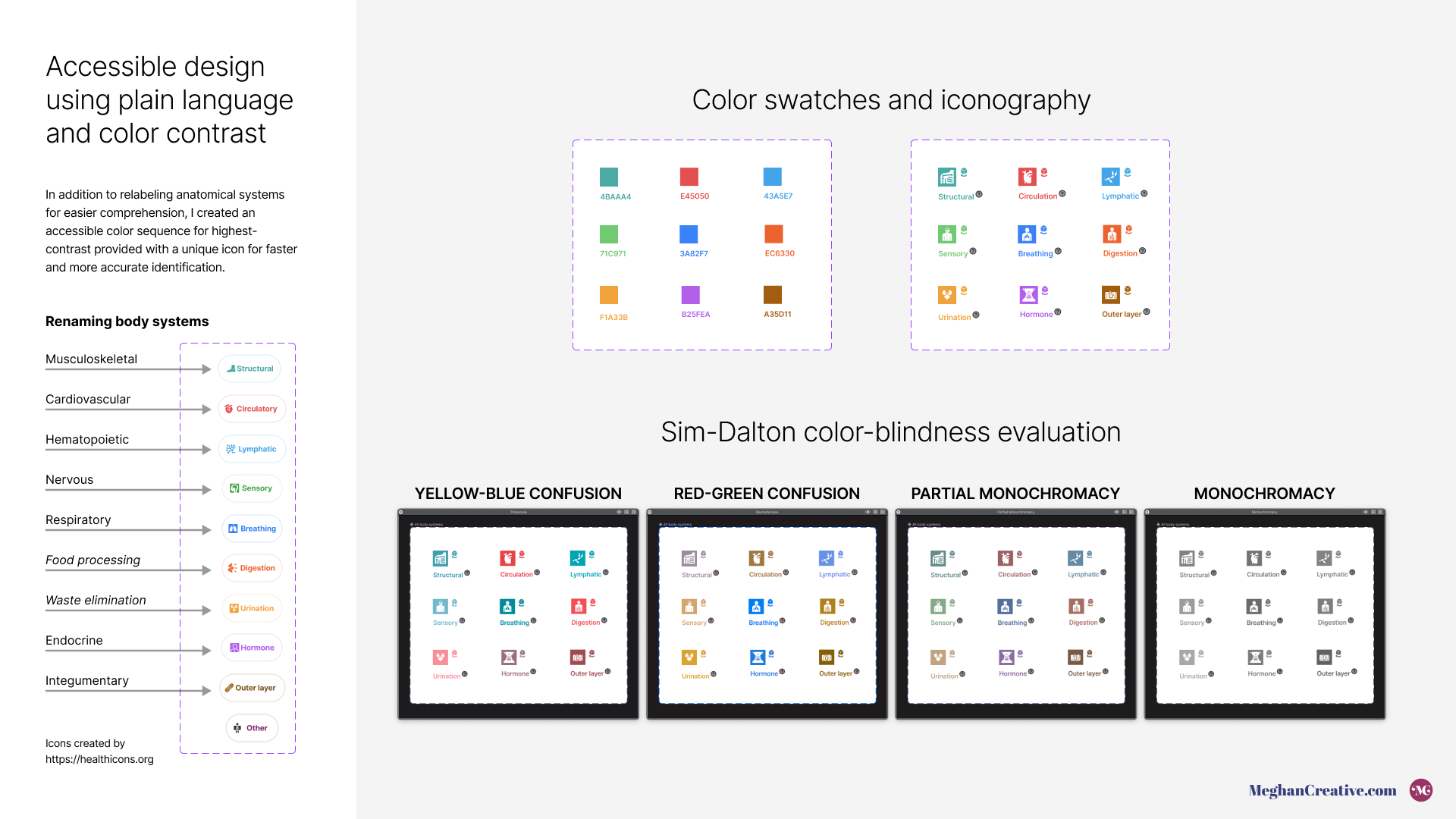
Addressed unexpected challenges like the complexity of simplifying body systems by allocating additional time to tangible goals within scope.
Process
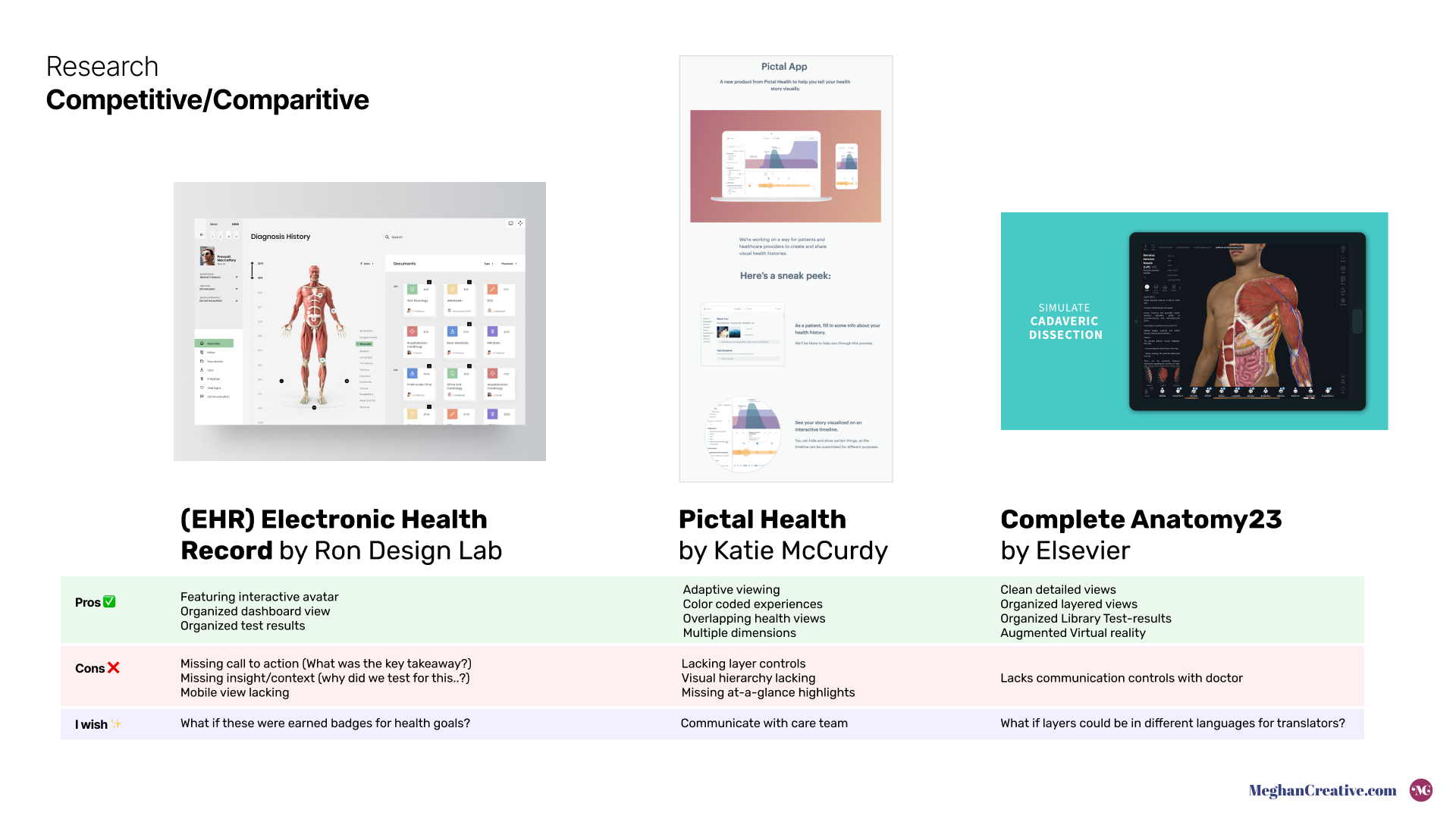
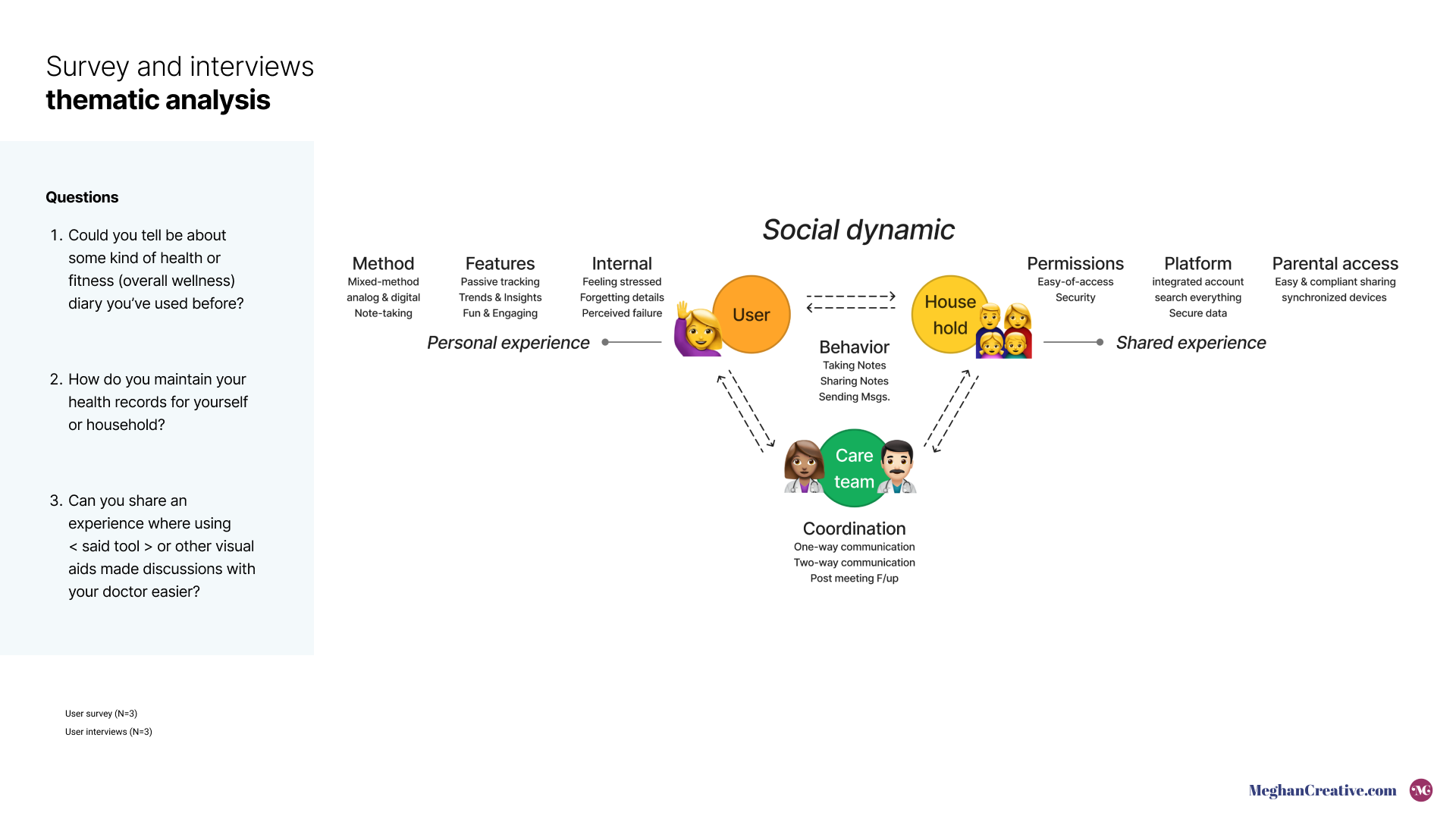
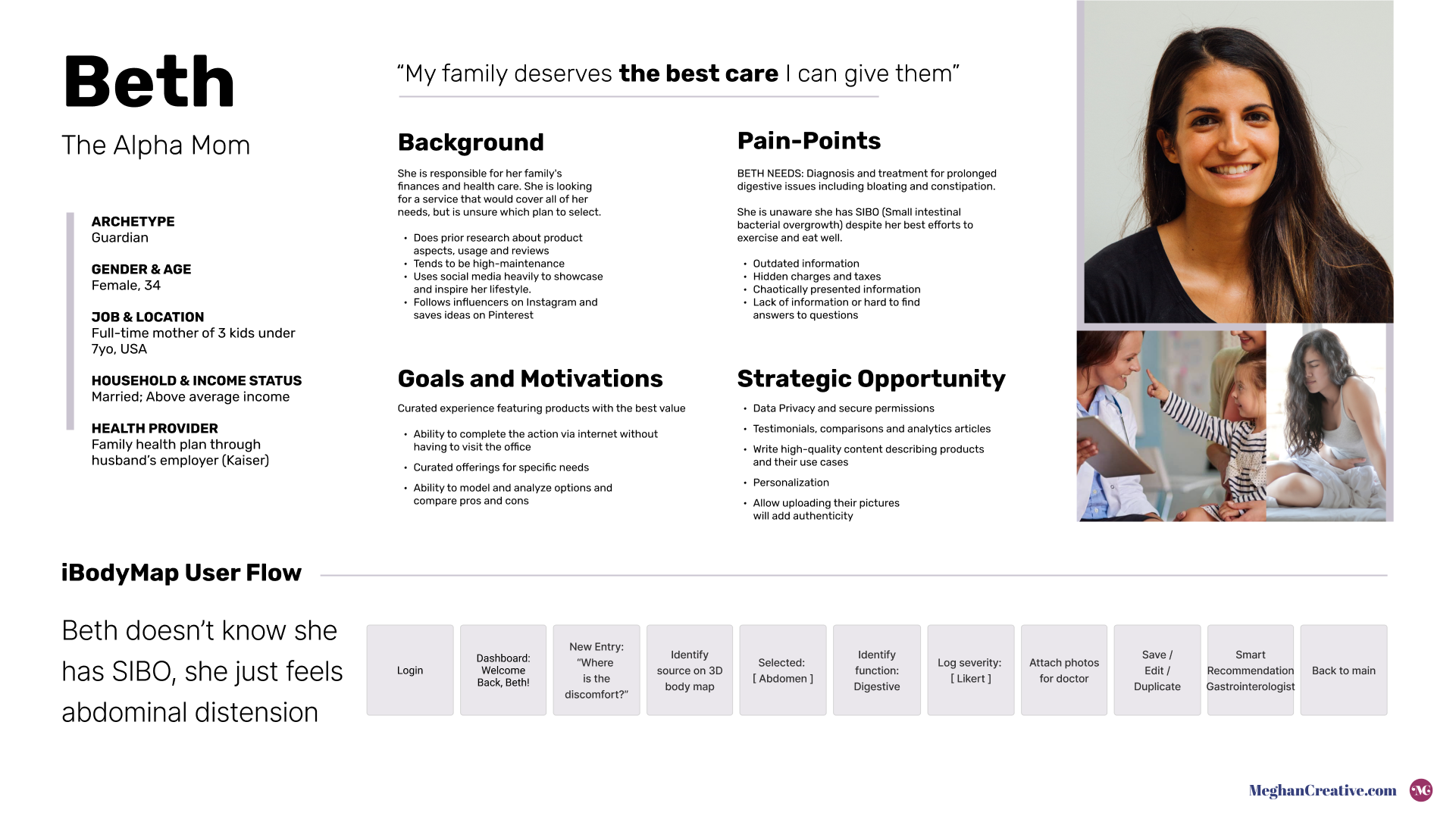
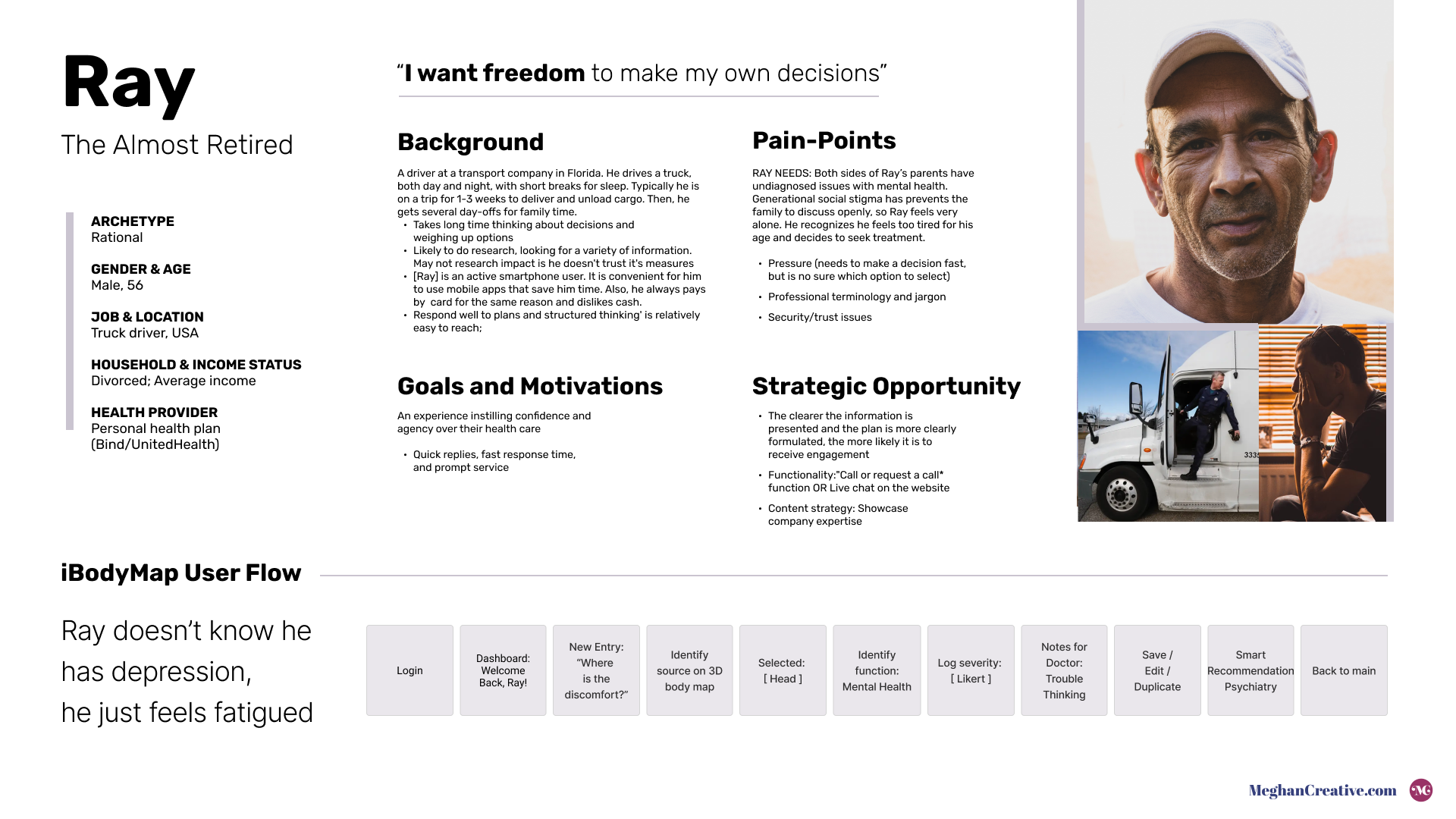
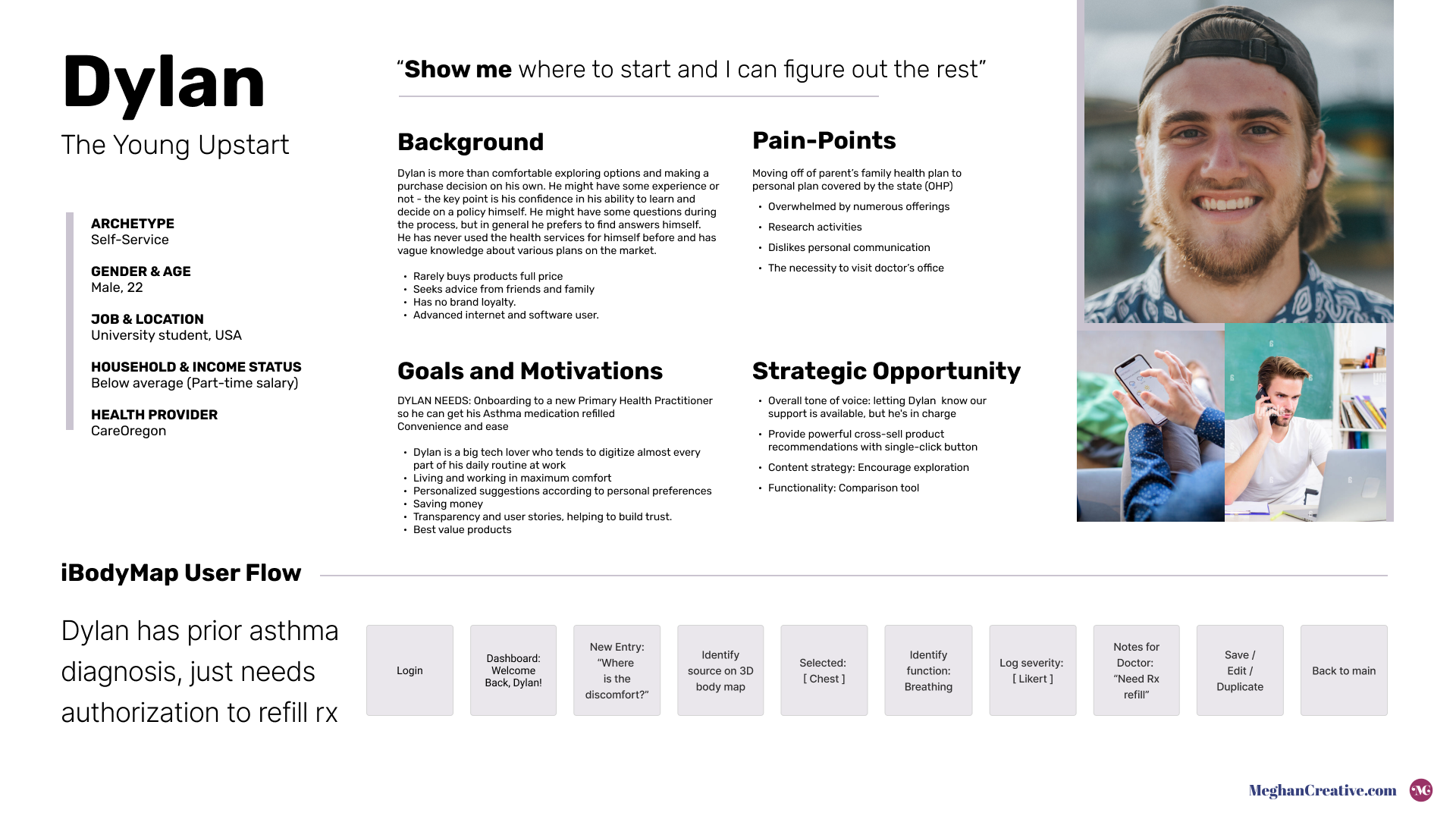
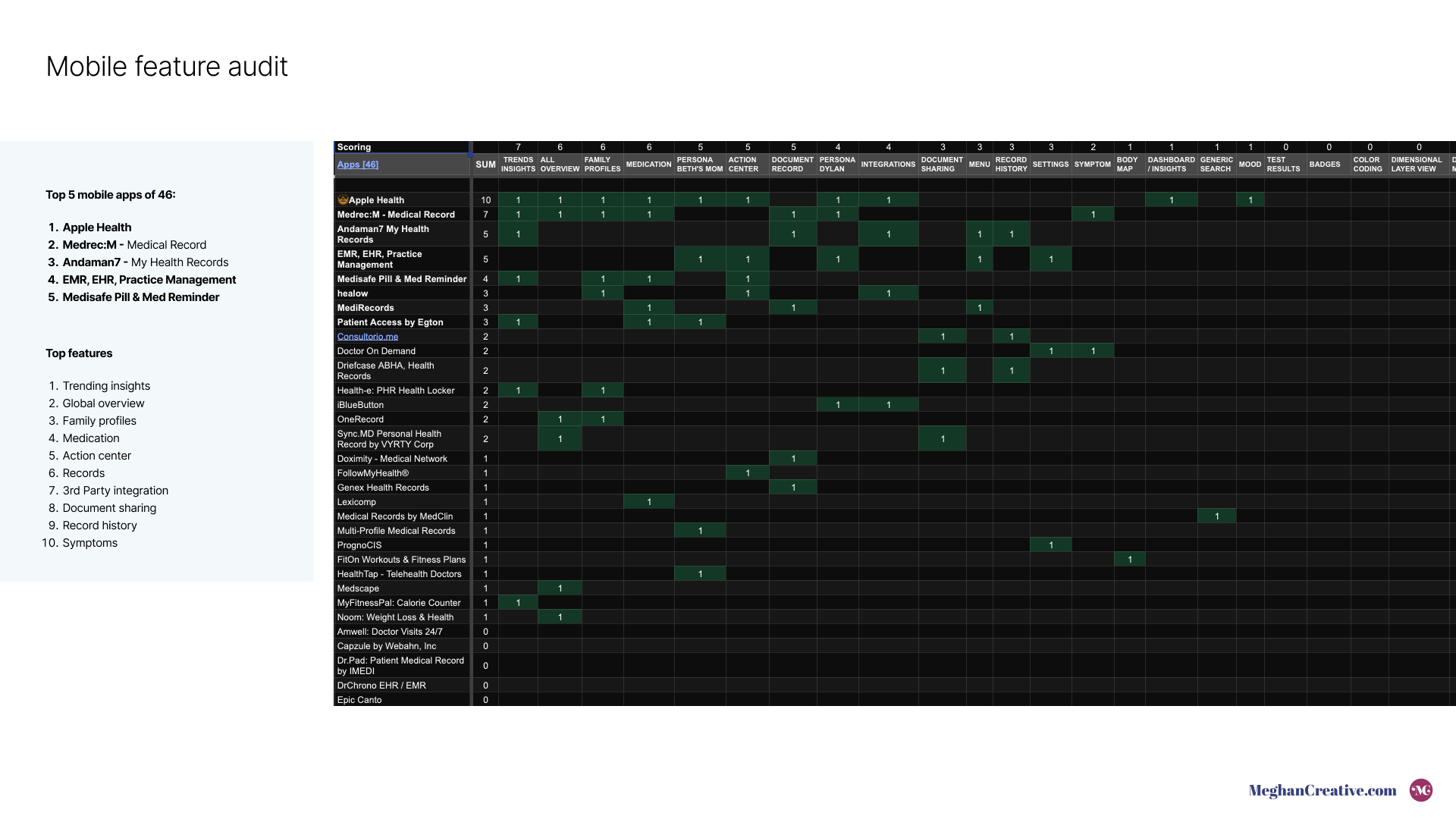
Research & Discovery: Engaged users in empathy interviews and surveys (minimum 3 participants) and conducted competitive analysis to identify struggles with app engagement and friction at doctor visits.
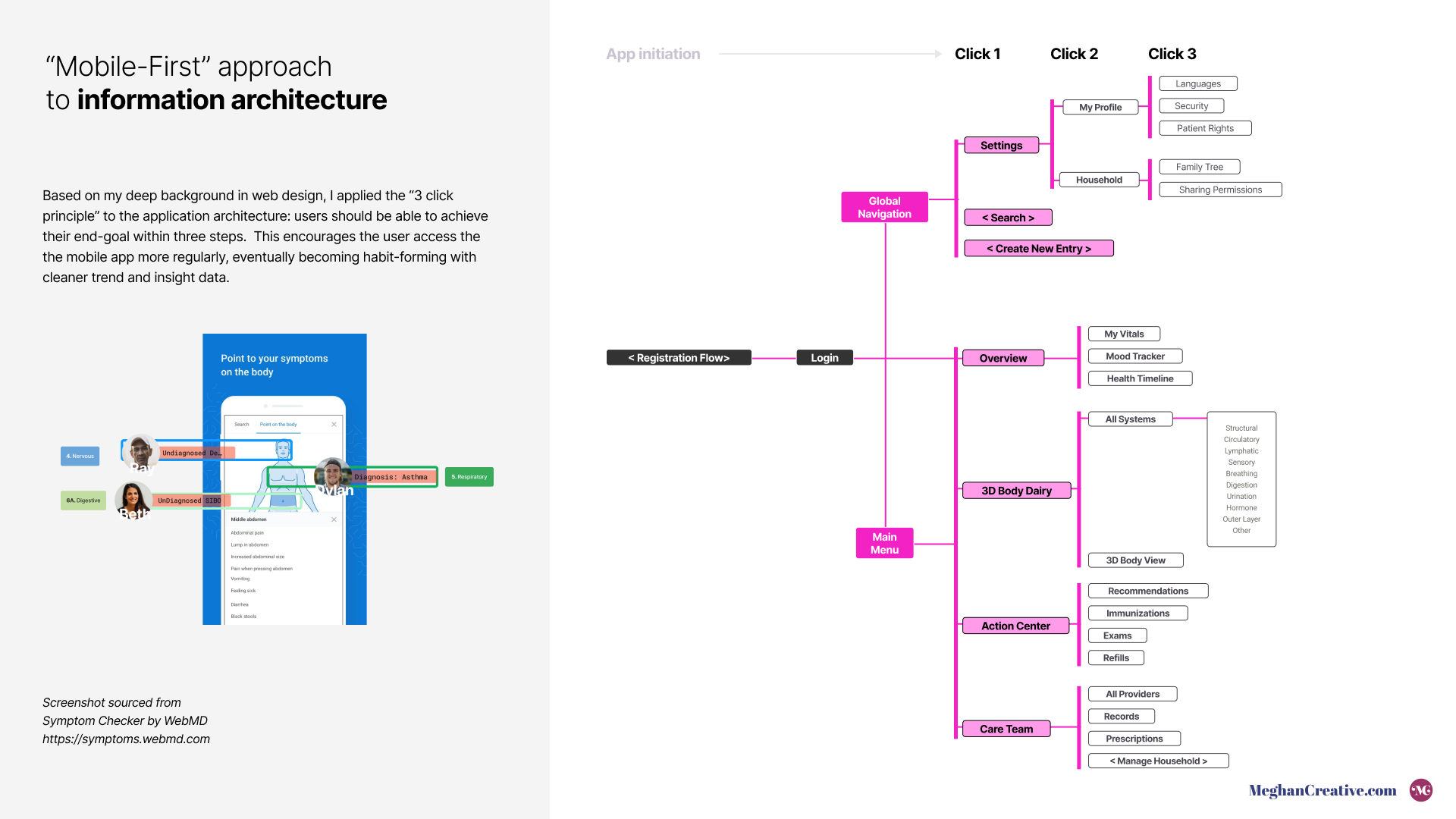
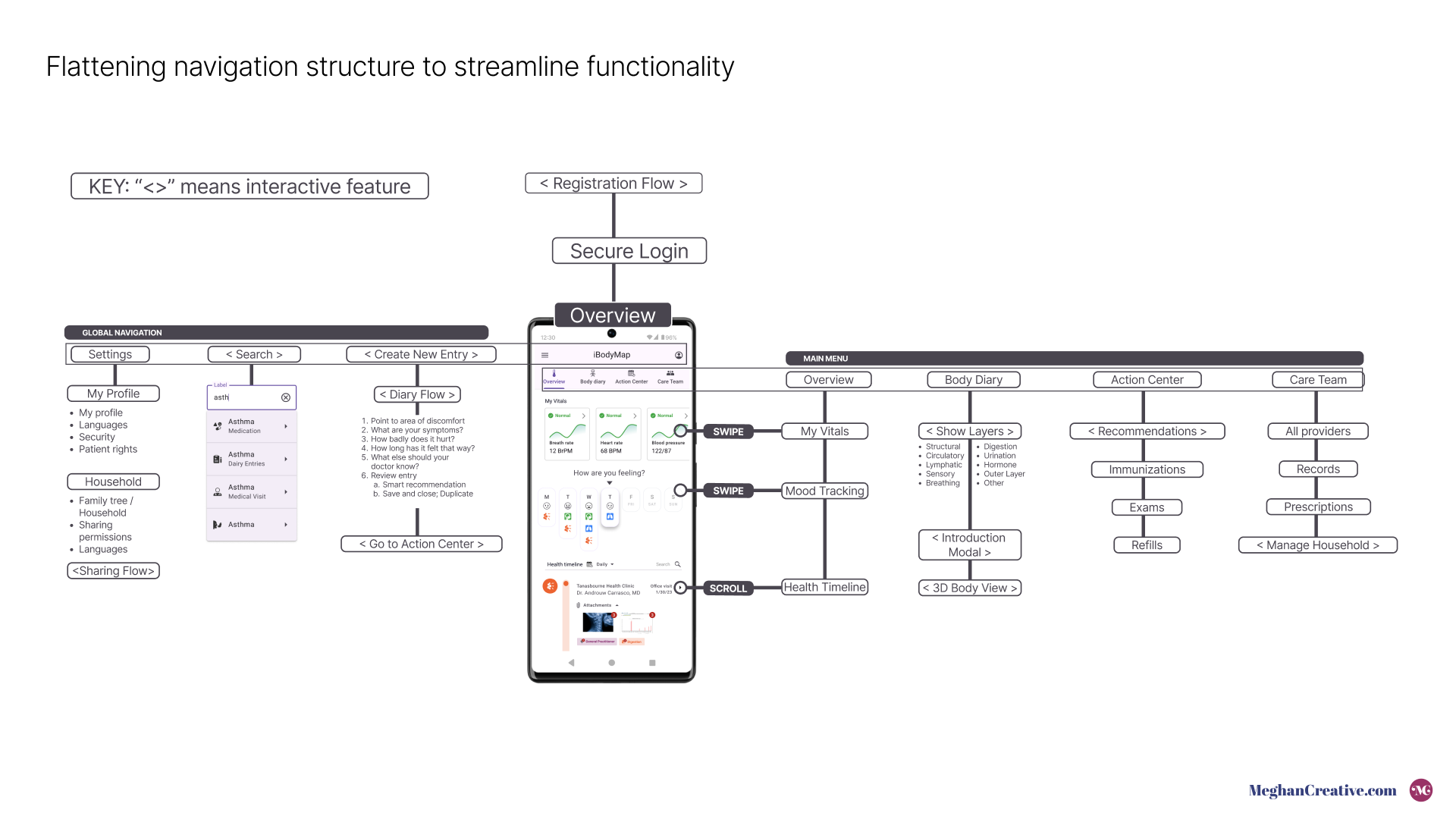
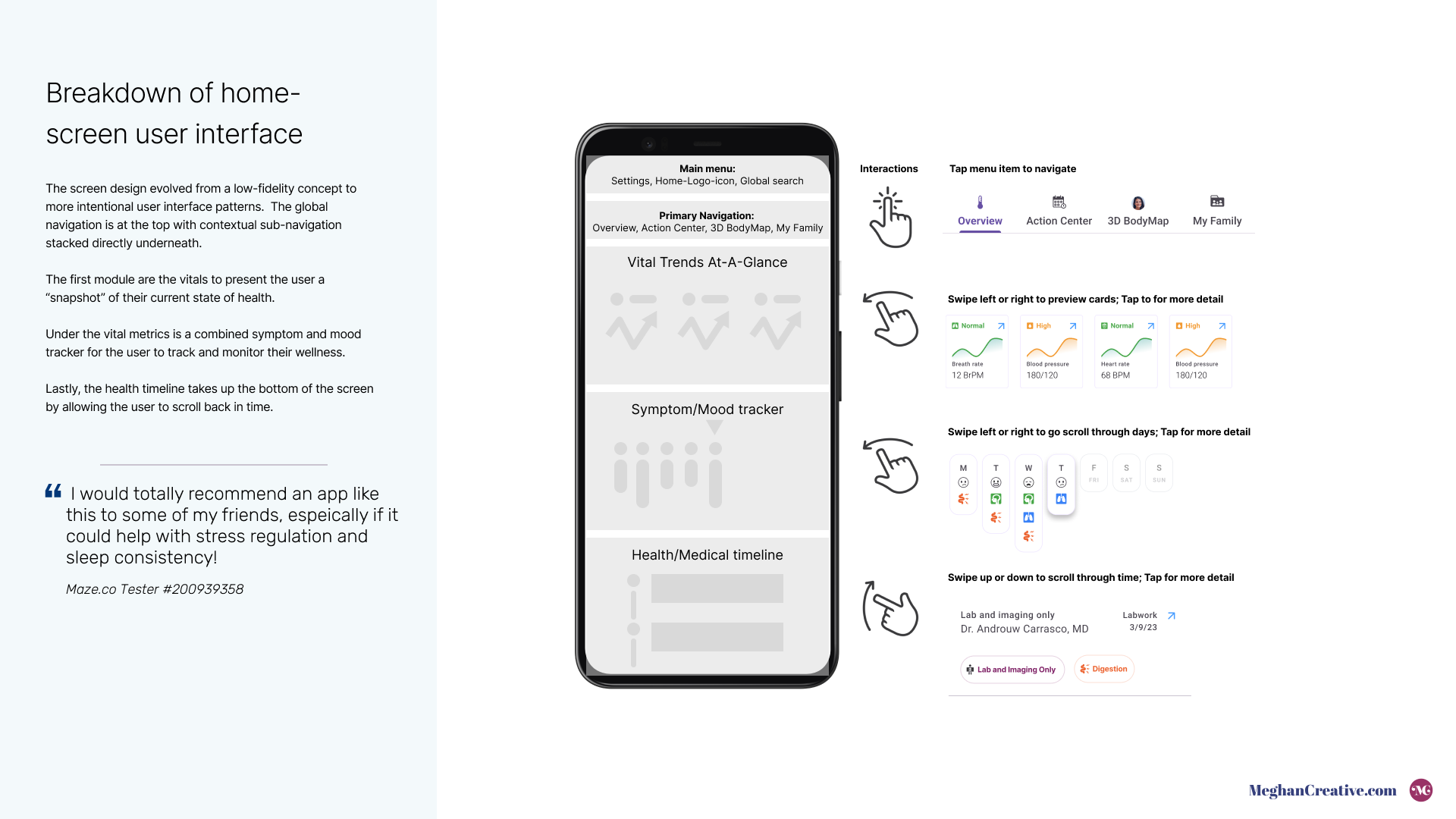
Design Strategy: Redefined information architecture around user-friendly elements, emphasizing simplified language and ease of data sharing.
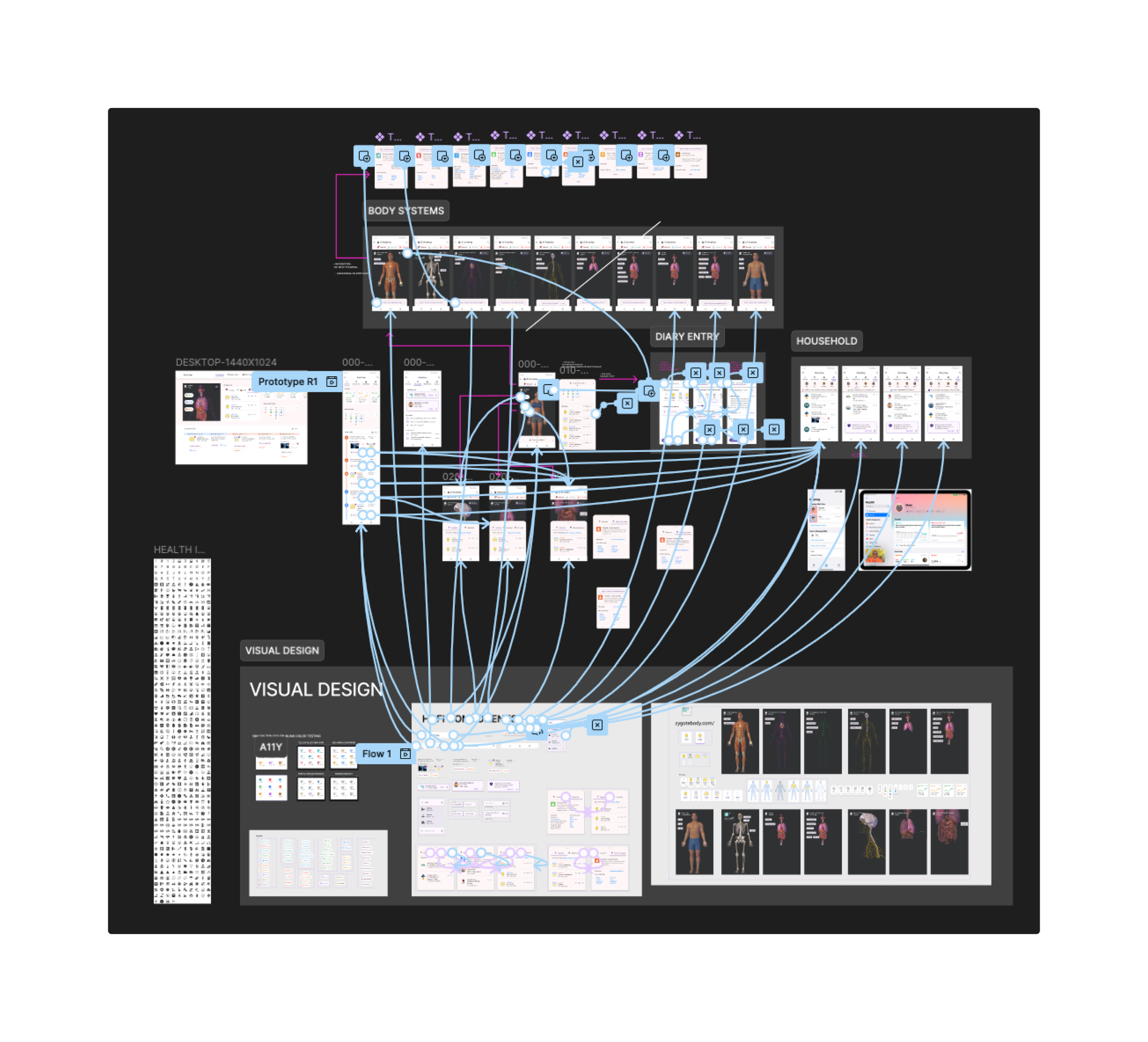
Experience Design: Developed user-friendly interactive prototypes and refined navigation to enhance usability.
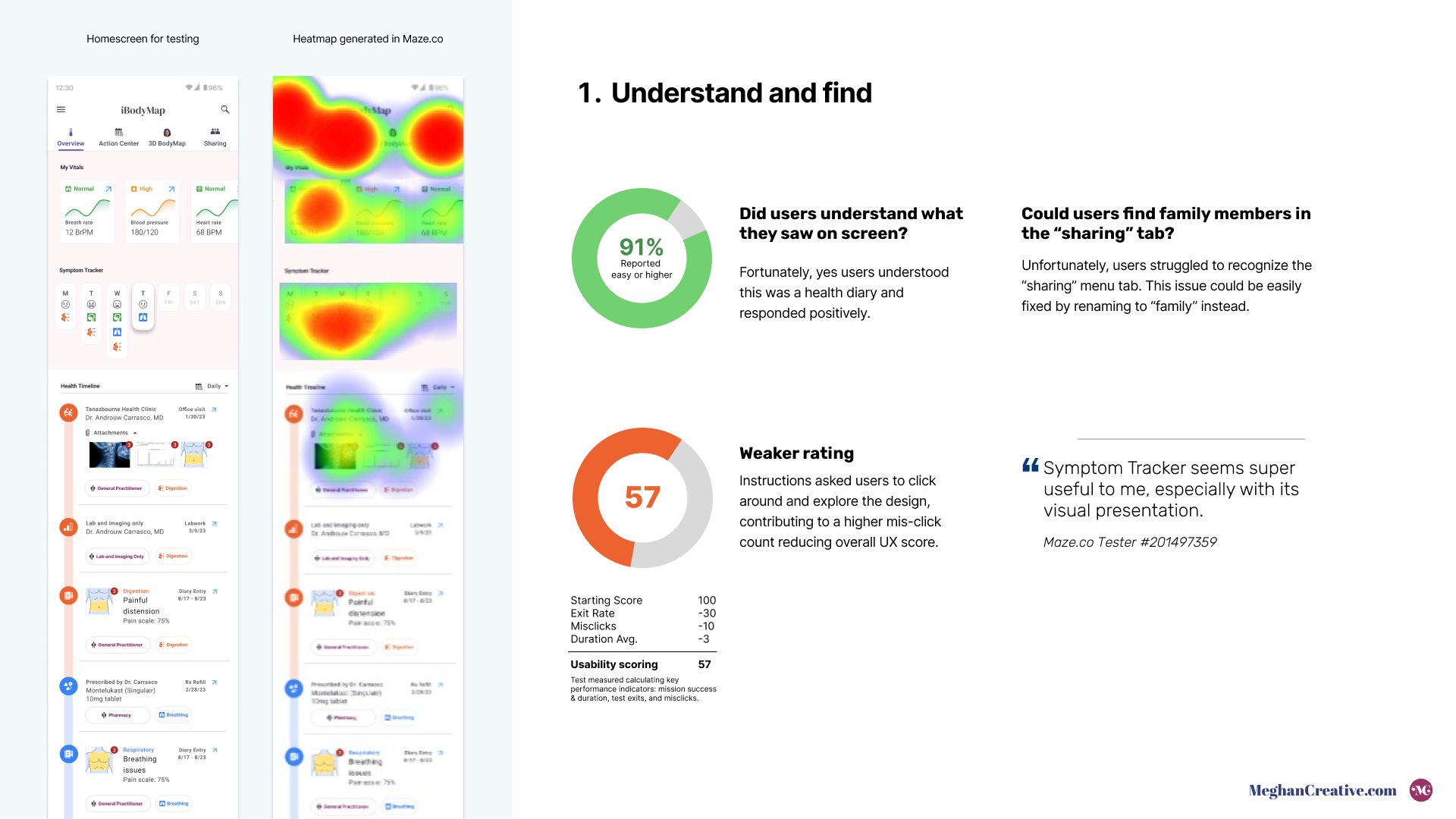
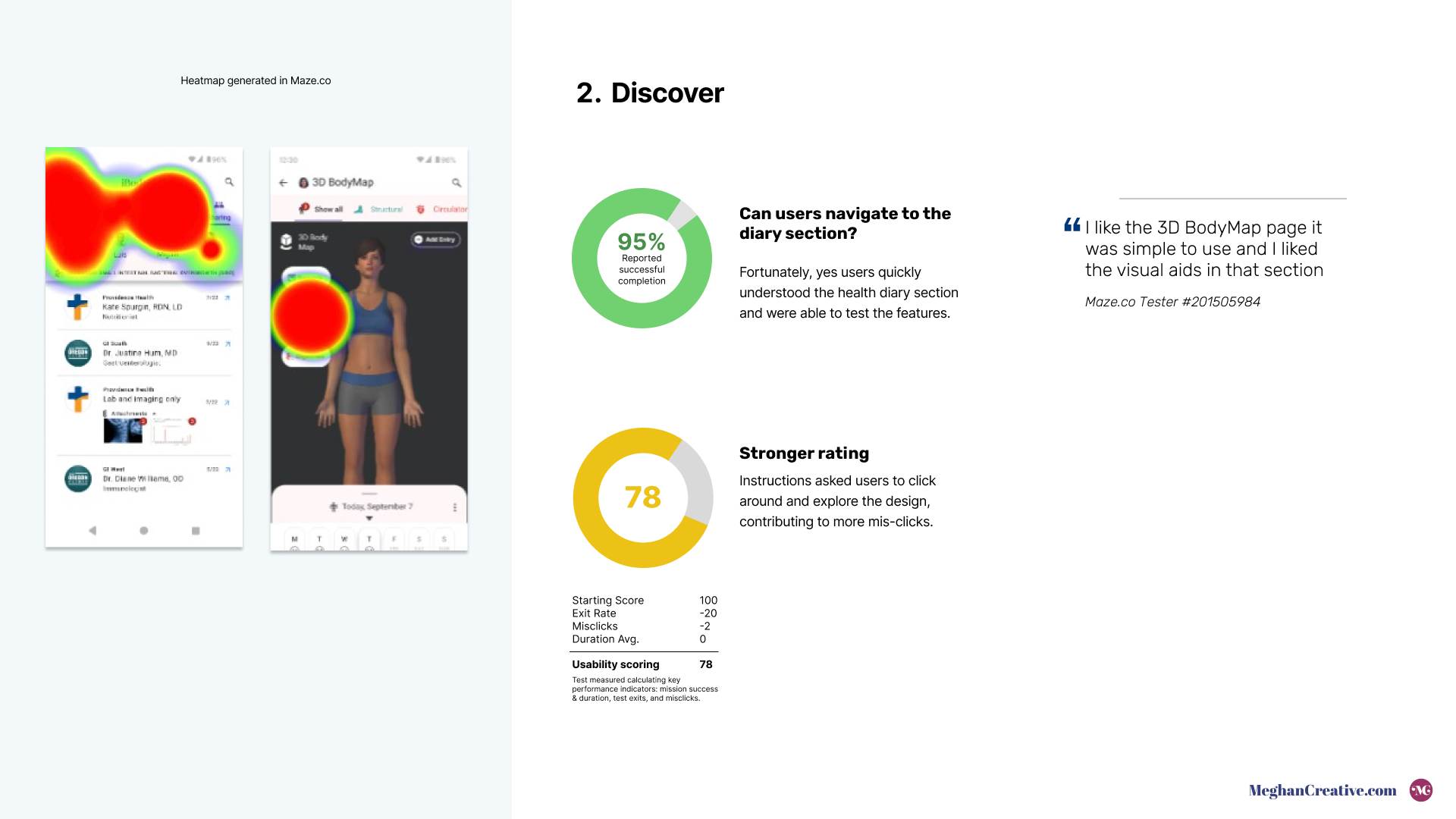
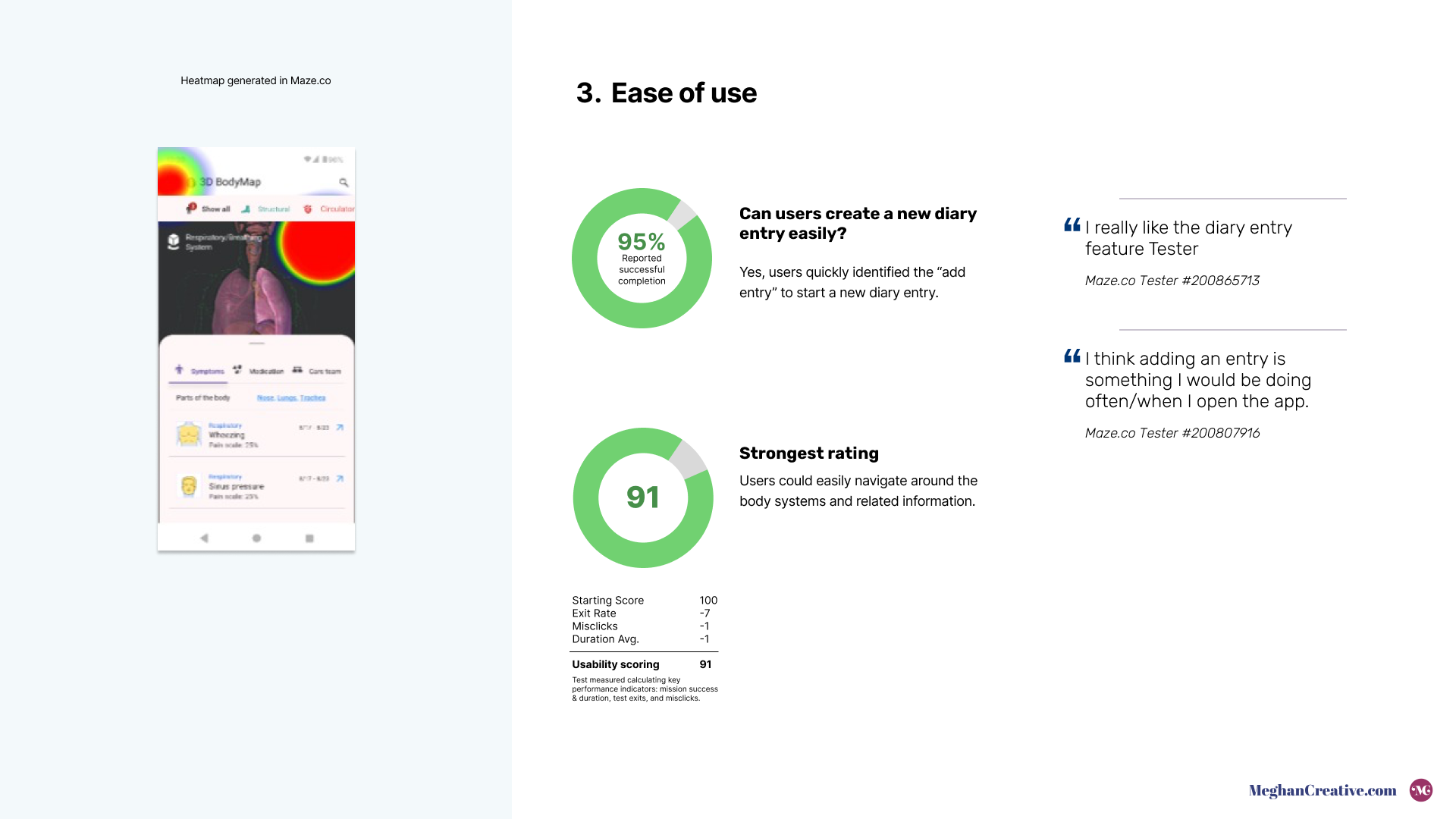
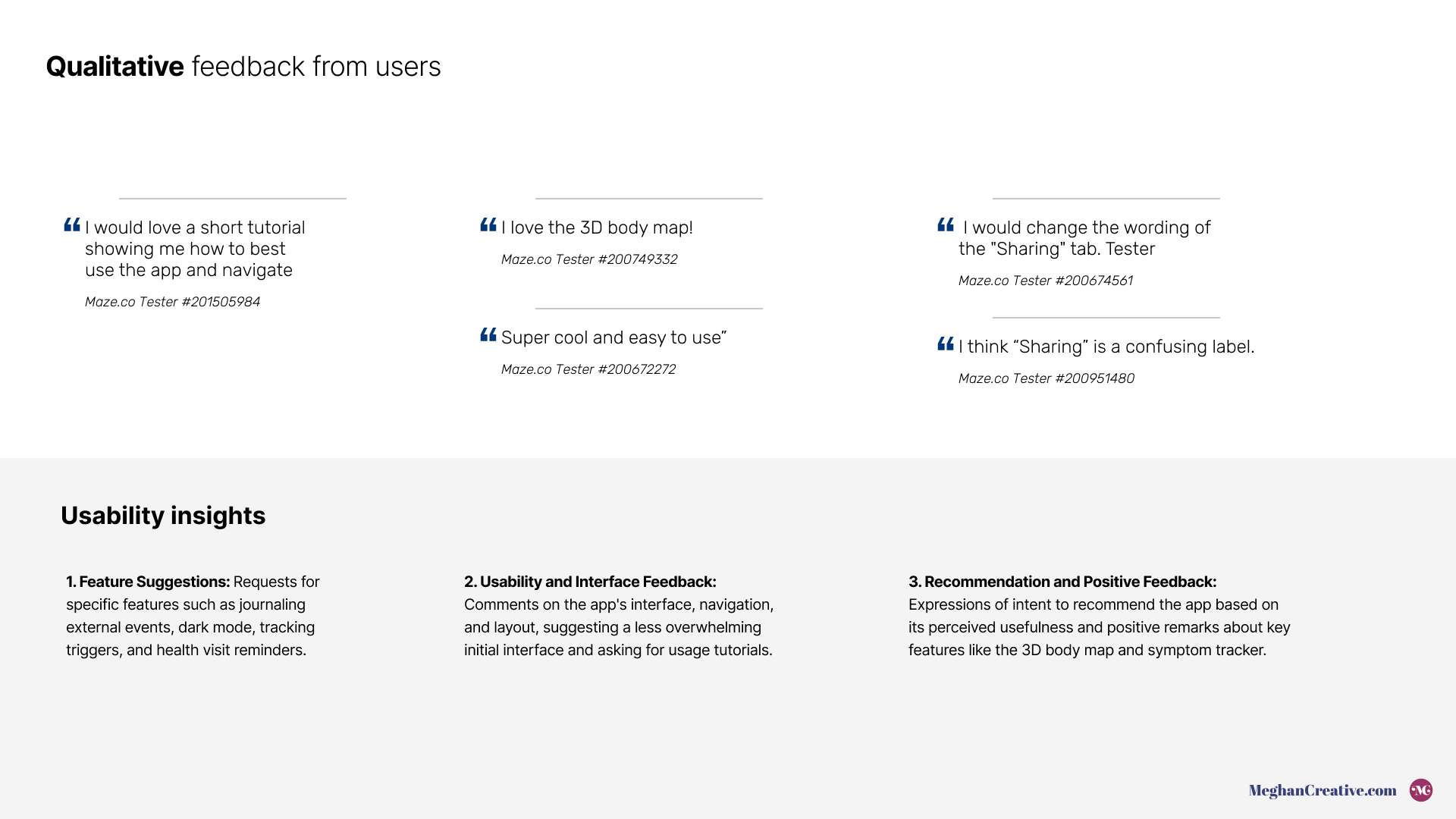
Testing & Iteration: Conducted thorough usability testing via Maze.co; users responded positively to the diary feature while tests prompted revisions in the family navigation menu.
Outcomes
Positive user feedback highlighted success with the diary entry feature and strong user engagement.
Success measured by qualitative feedback and planned KPIs like new sign-ups.
Lessons learned emphasized the importance of user-centered adjustments and precise navigation improvements.
Conclusion
Effectively managed a solo UX project, resulting in an engaging health application that addresses key user challenges by combining empathy-driven insights with innovative design strategies.
Set a foundation for improved app engagement and health management in future expansions.