Research-Driven Wellbeing: A Privacy-Centered Wellness App

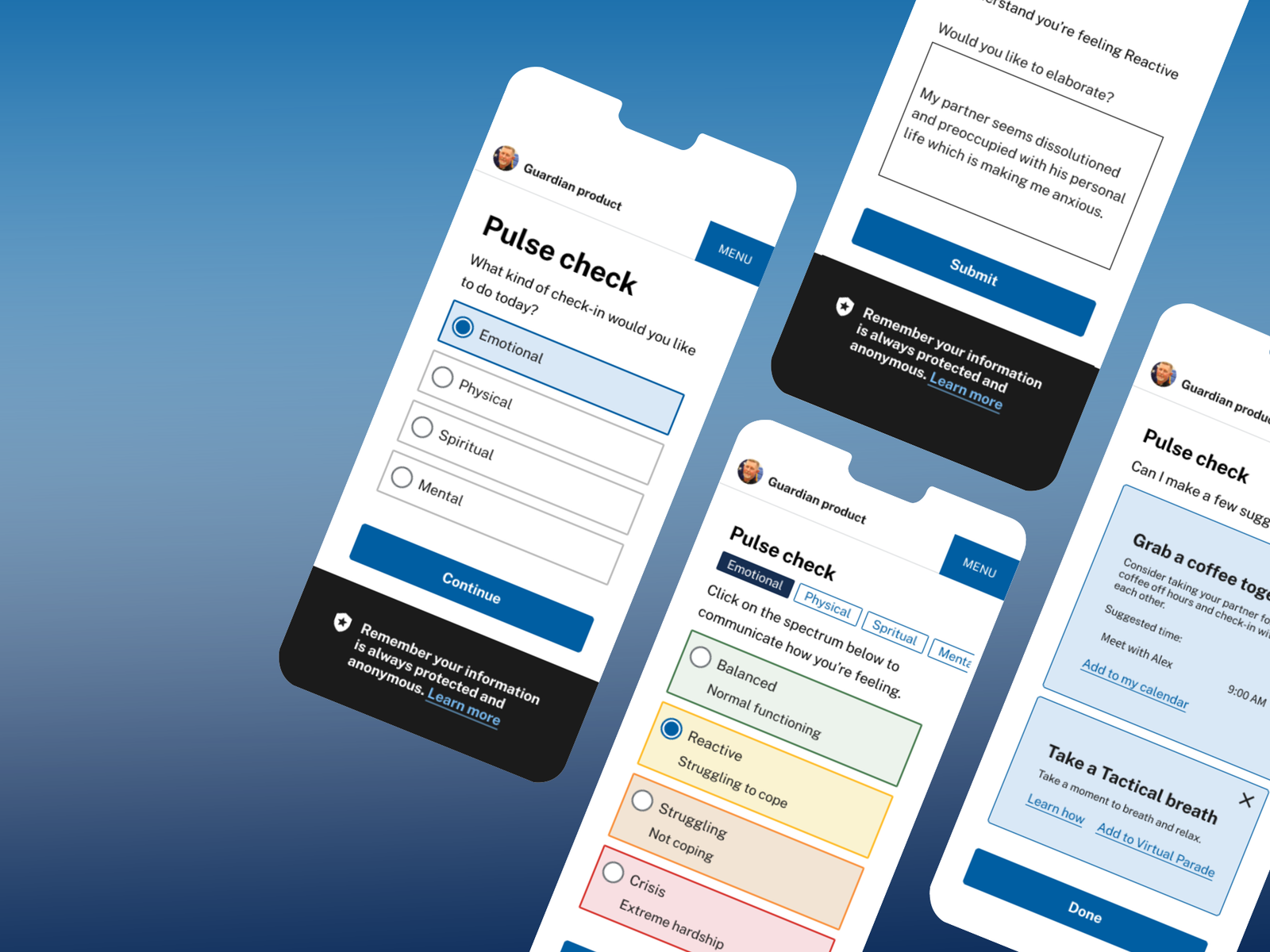
An image showing four mobile phone screens displaying a wellness app mockup called "Pulse check" against a blue background.

Background

  • Joint effort to tailor a digital platform to meet the wellness needs of first responders.
  • Achieved comprehensive understanding through interviews with relevant professionals, subject-matter experts, and powerful stories from individuals (e.g., firefighters) regarding the impact of stress.

Purpose

  • Aimed to develop a mental health solution through a digital platform tailored for first responders facing unique challenges.
  • Focused on creating a proactive, resilient wellbeing program to provide preemptive support and reduce long-term psychological impacts like burnout.
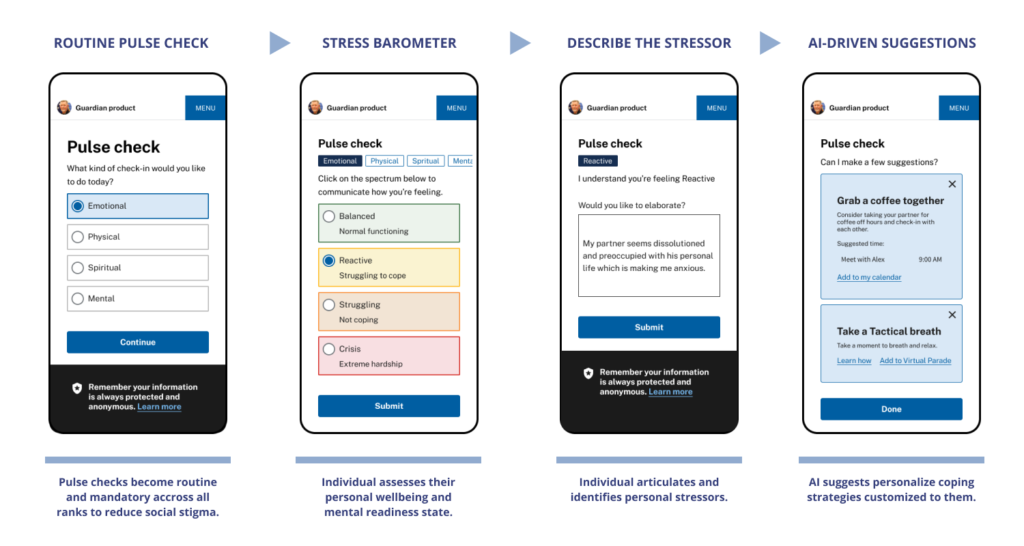
An infographic detailing a four-step digital workflow for a mental wellness application called "Pulse check," branded as a "Guardian product." The process moves from left to right through four illustrated smartphone screens with brief descriptions below each.
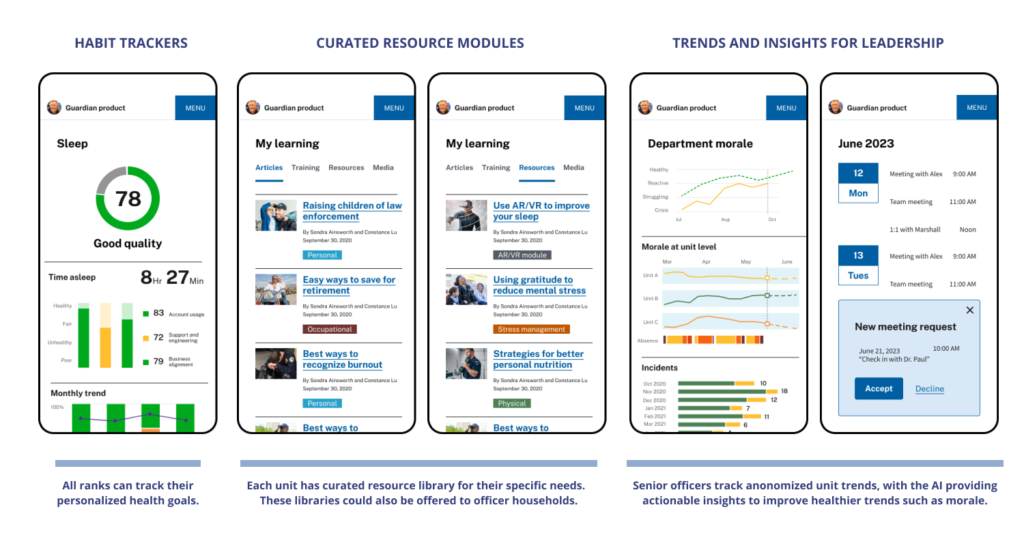
This image displays five mobile app interface mockups organized under three main feature categories, designed for officer health, learning, and leadership insights.

Team

  • Personal Contributions: Conducted workshops, organized virtual sessions, and executed detailed user research (protocol development and interviews).
  • Design Support: Collaborated on onboarding, information architecture, and crafted narratives for clear user journeys and privacy-conscious experiences.
  • Team Structure: Diverse group of internal and external experts ensured a comprehensive product offering.
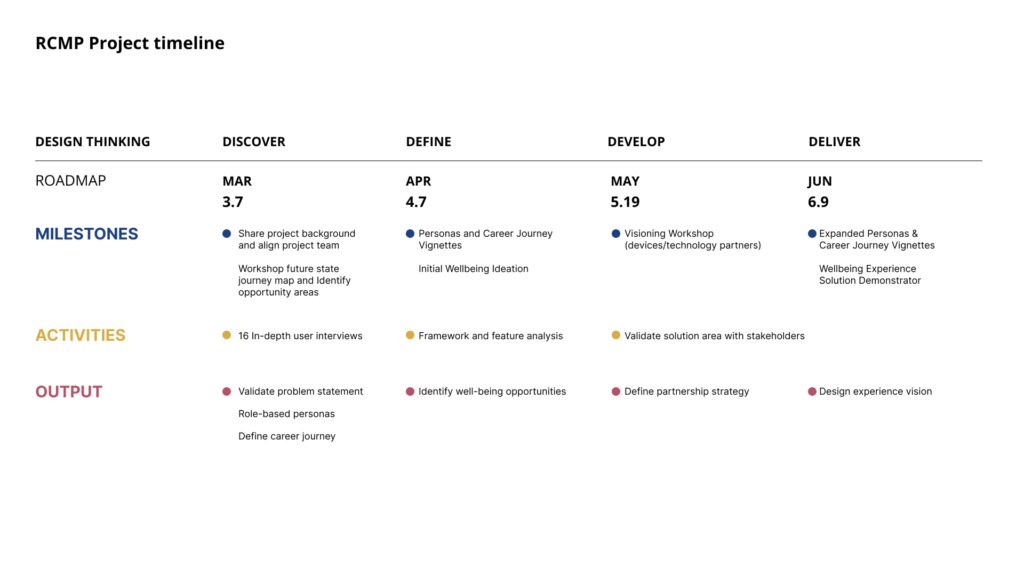
An RCMP Project timeline chart structured around four phases of the design thinking process: Discover, Define, Develop, and Deliver.
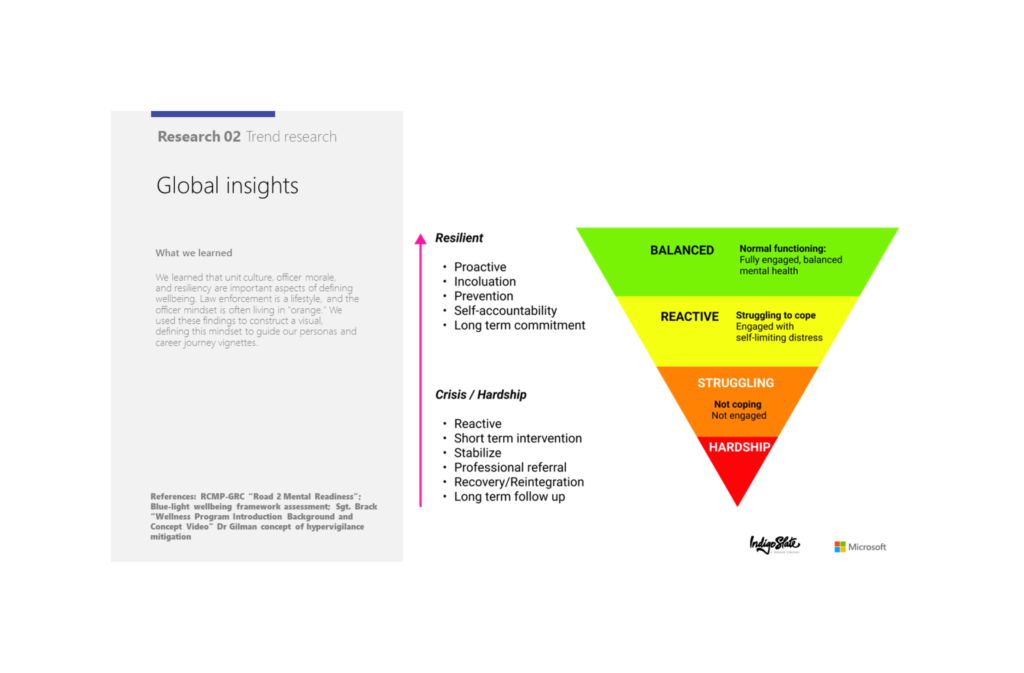
An presentation slide titled "Global Insights" that shows a mental health continuum using a large, upside-down triangle divided into four colored sections.
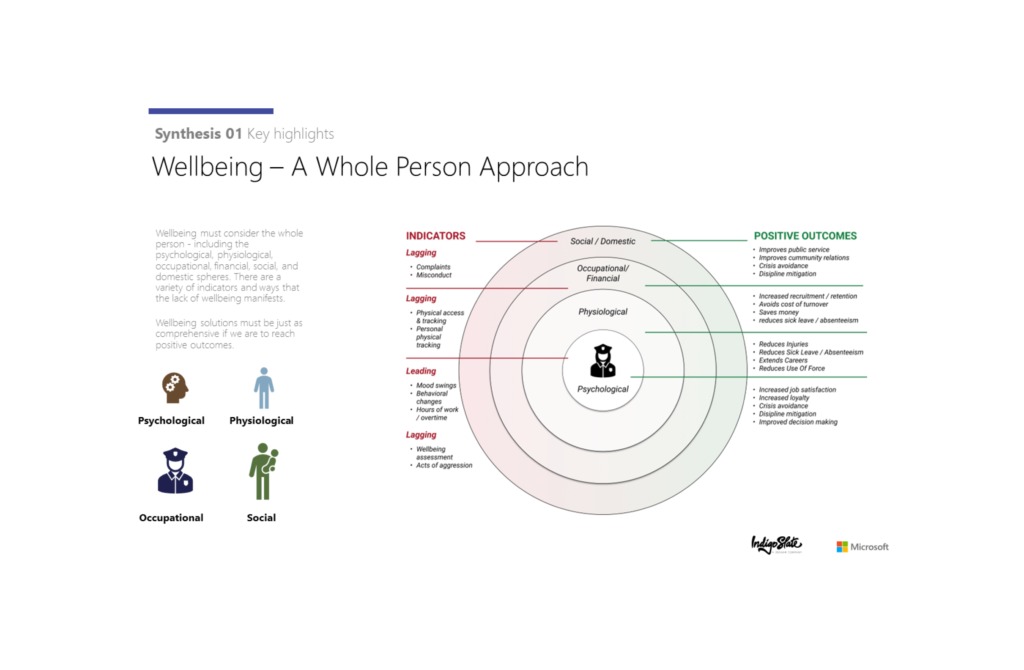
An infographic slide titled "Wellbeing – A Whole Person Approach." The diagram features four concentric circles at the center representing different layers of wellbeing. The innermost circle is labeled "Psychological" and shows an icon of a person in a uniform. Moving outward, the next circles are labeled "Physiological," "Occupational," and the outermost ring is "Social / Domestic."

Scope

  • Timeline: Spanned several months beginning in early spring, with key milestones every eight weeks.
  • Scope: Focused on wellbeing and platform personalization through research, personas, and solution envisioning.
  • Constraints: Addressed confidentiality limitations and strict data anonymization requirements while managing the complexity of human wellbeing.
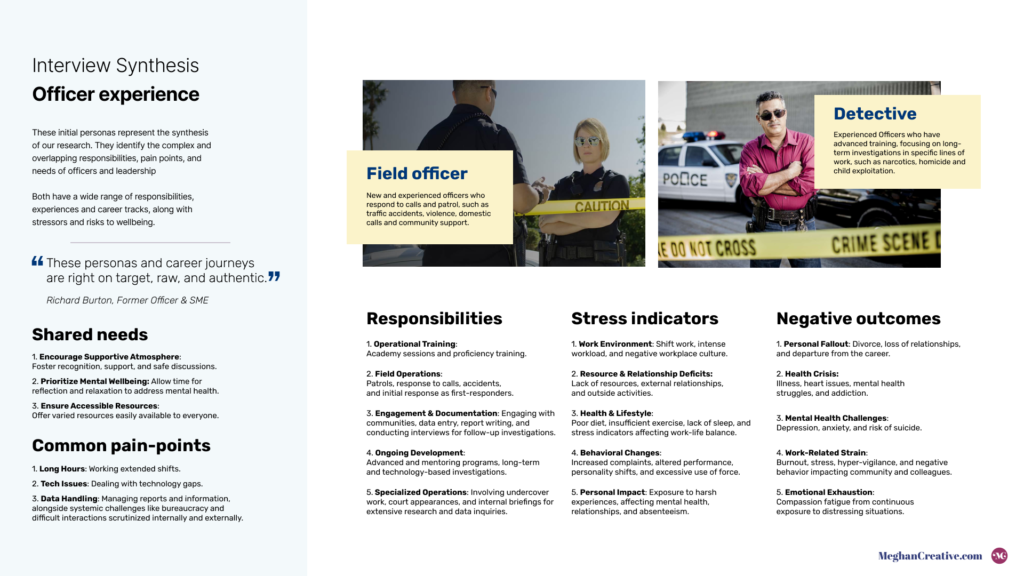
An interview synthesis presentation page titled "Officer experience."
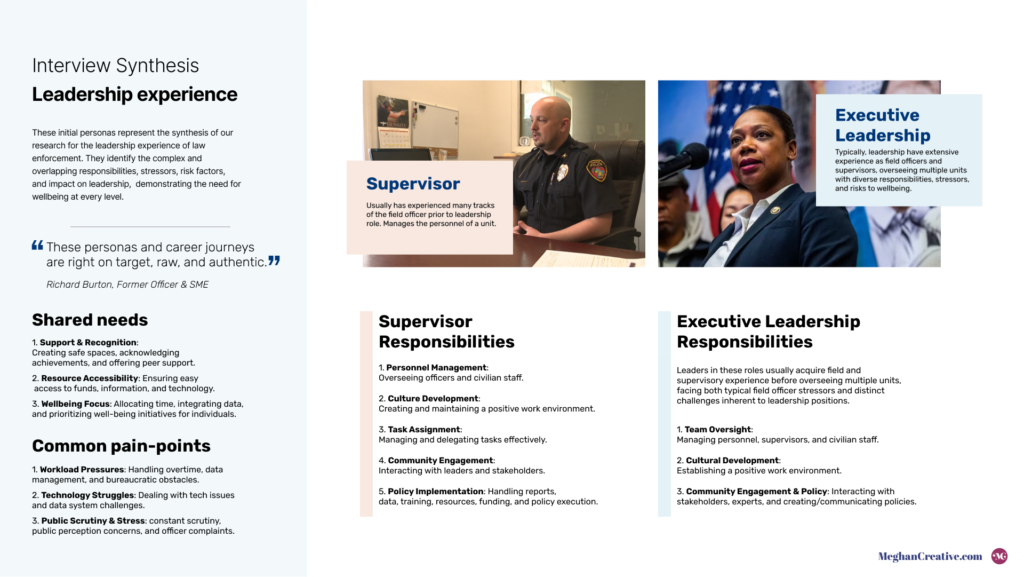
An presentation slide titled "Interview Synthesis: Leadership Experience" that outlines insights into law enforcement roles, dividing them into two main categories: "Supervisor" and "Executive Leadership."
An infographic titled "Career Wellness: Experienced Officer 3-10 Years" maps out the emotional and professional timeline of mid-career police officers, featuring the quote, "Called in on everyone's worst day." [9SuVPW.png]
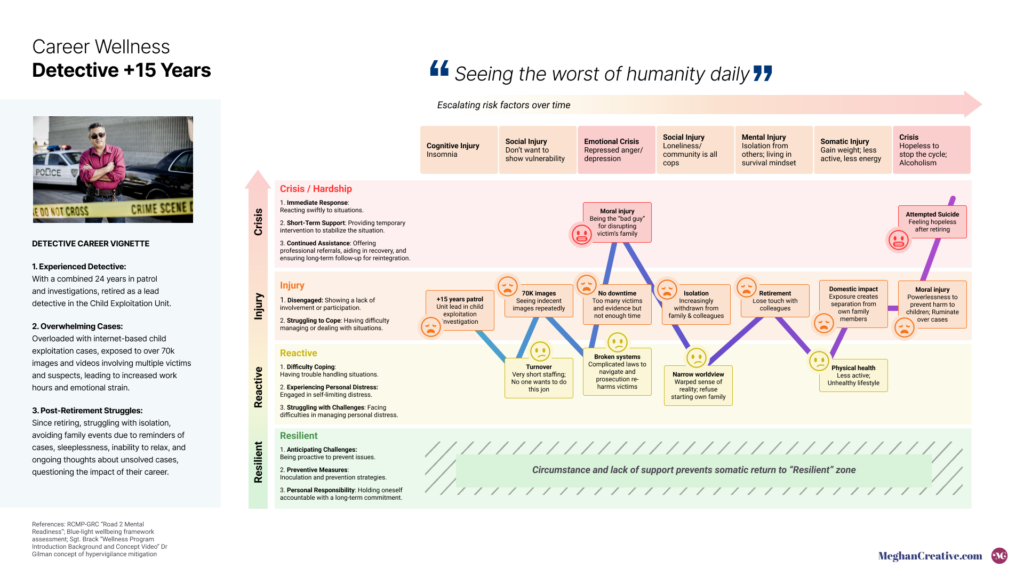
This image presents an infographic titled "Career Wellness: Detective +15 Years." It maps out the long-term emotional and mental journey of a seasoned detective, using the quote "Seeing the worst of humanity daily" as its central theme.
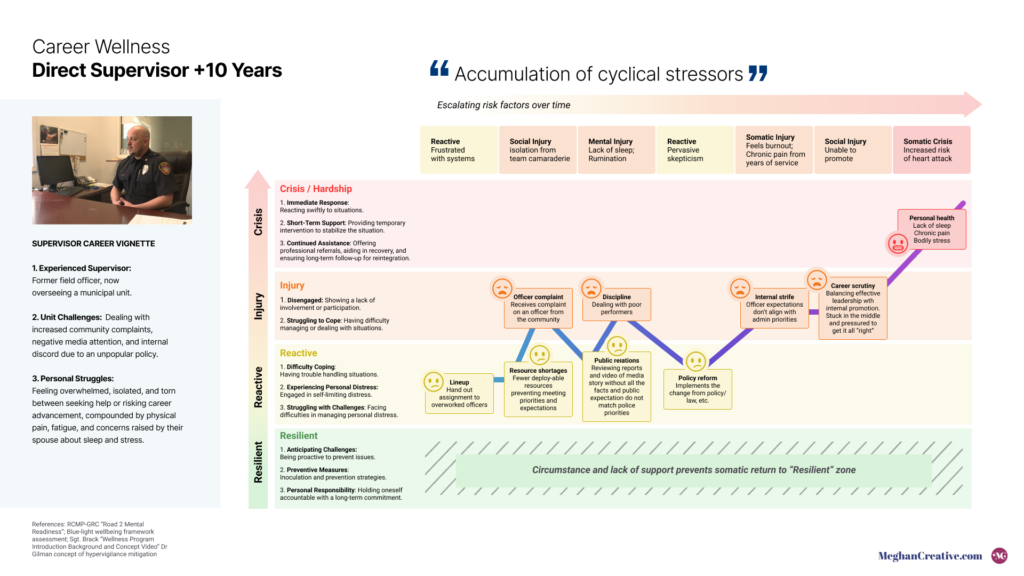
This image is an infographic charting the cumulative psychological and organizational stress experienced by a direct supervisor over a 10-year career.
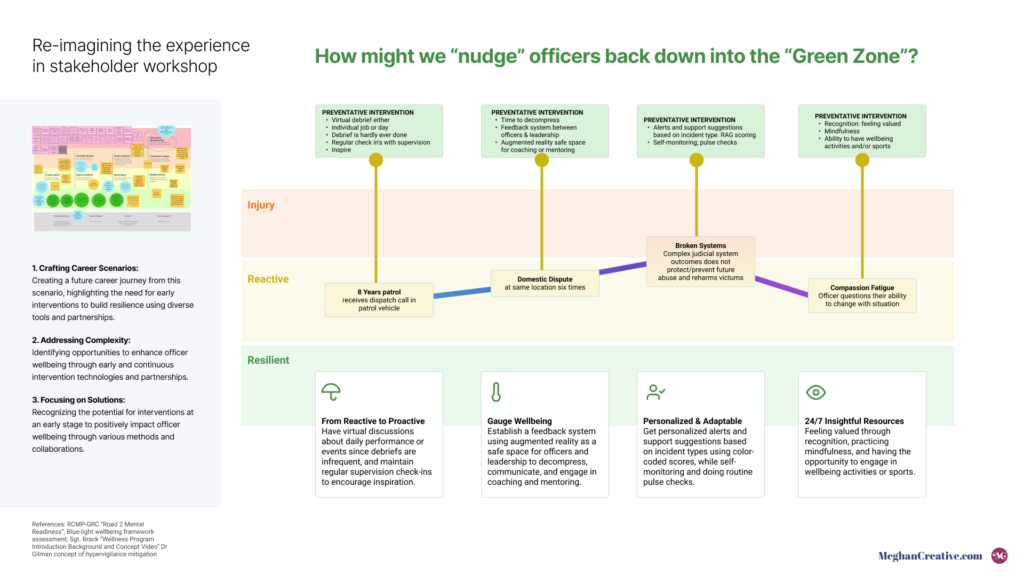
A diagram titled "How might we 'nudge' officers back down into the 'Green Zone'?" outlining strategies for stakeholder wellbeing across different stress levels.

Process

  • Design Phases: Discover, Define, Develop, and Deliver.
  • Execution: Engaged 9 first responders in interviews; the Define phase produced three user personas to guide prototyping and testing efforts.
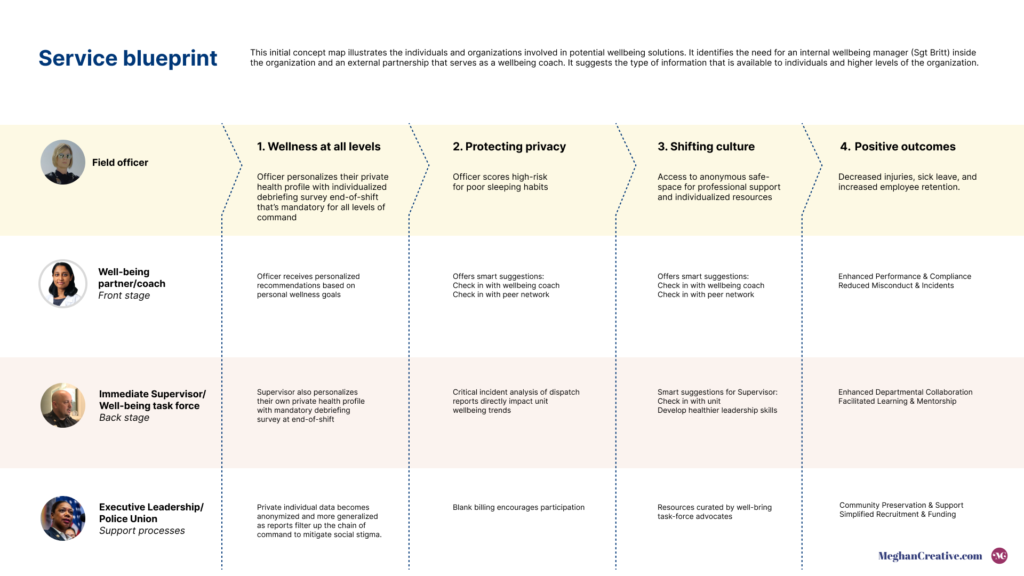
A diagram titled "Service blueprint" that maps out an organizational wellbeing program across four key phases and four different staff levels.

Conclusion

  • Designed a research-driven, privacy-centered wellness app for first responders that shifted the focus toward user-centric development.
  • Demonstrated ability to translate complex user needs into actionable insights for user-centered innovation.

A quick, low-cost first step 

Before scouting a route, I observe what is happening. This structured look finds where visitors encounter hurdles, where interest cools,
and where your first effort will matter most. You receive a custom report of my findings and a prioritized list of fixes.